Traditional Chinese Medicine Daoyin for the 24 Solar Terms

Click the flyer above to book a place on the seminar

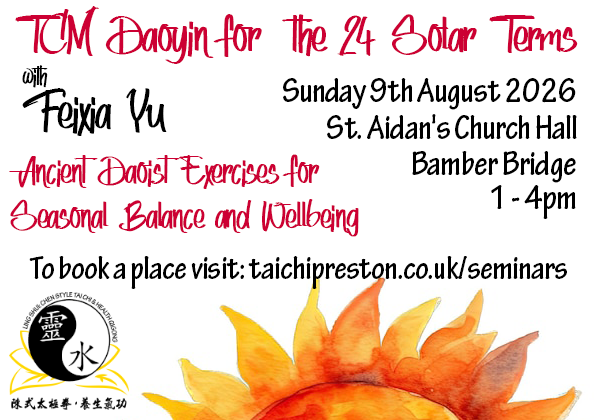
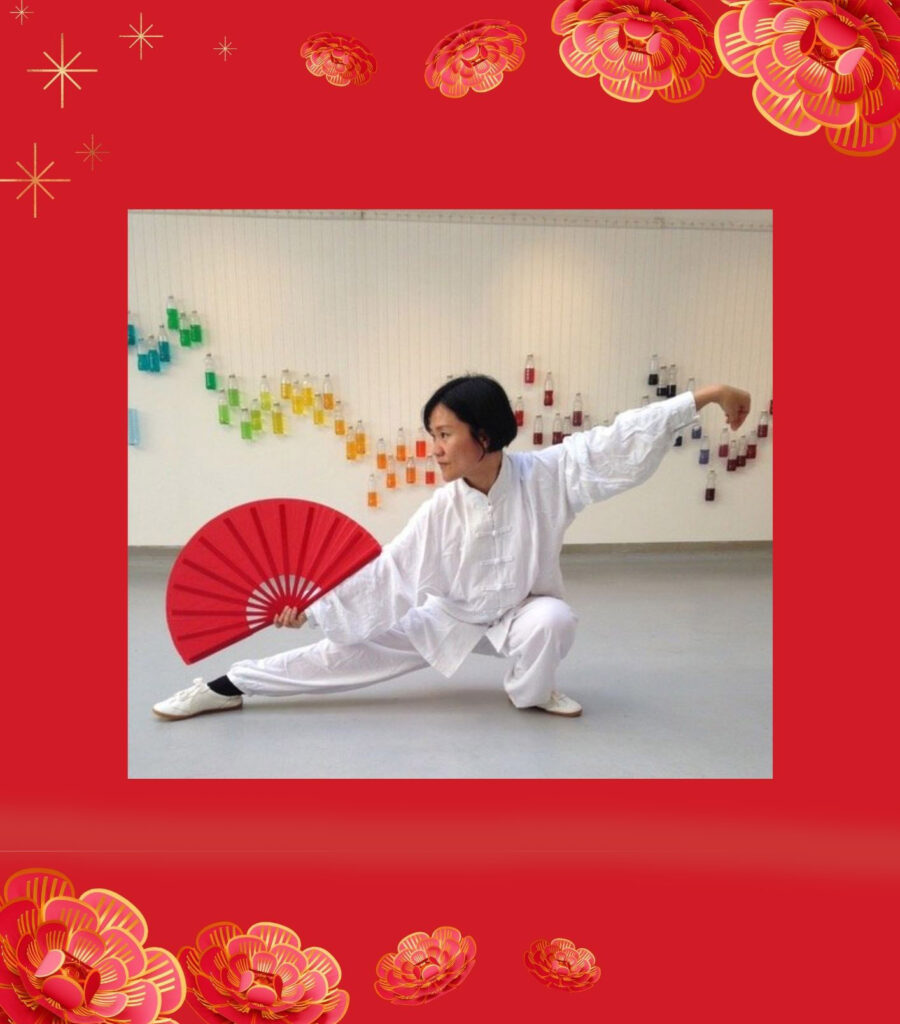
Spend an afternoon with Feixia Yu learning about Master Zhang Mingliang’s Daoyin for the 24 Solar Terms which integrates Traditional Chinese Medicine and Daoist wellbeing traditions with gentle, seasonal Daoyin exercises.

The system features 24 movements designed to harmonize your internal qi flow with the changing energies of the natural world, supporting yin-yang balance and promoting a deeper sense of alignment between body, breath and season.

In this three-hour seminar, you will be introduced to a selection of these movements, explore how each movement guides energy through the body to mirror the seasonal shifts of spring, summer, autumn and winter, and discuss their intended effects on the corresponding meridians.

The seminar costs £25 - book your place by visiting our seminars booking page now.

2026 Seminar Programme

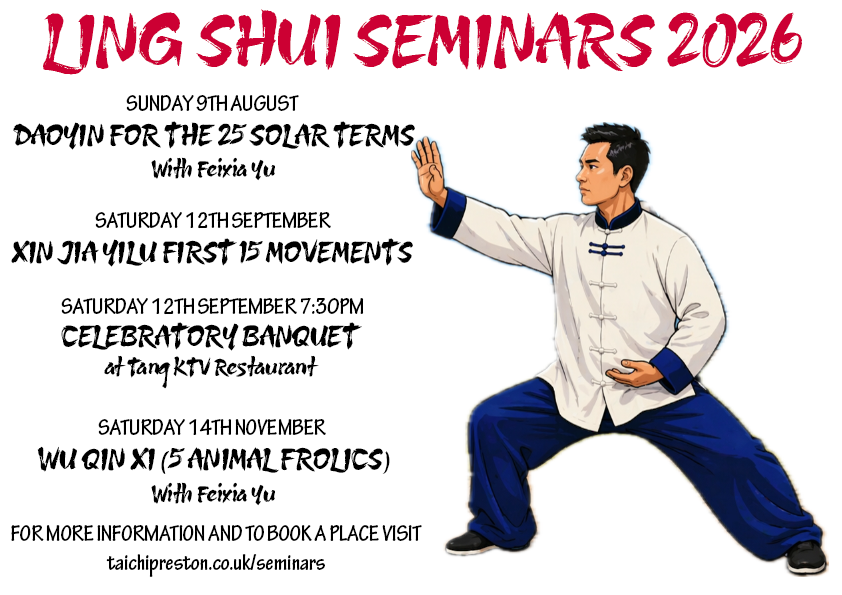
After a slow start to the year and to make up for missing the lunar new year, we've got a few seminars booked (with hopefully one or two more to follow before the end of the year).

We've got Feixia Yu joining us in August and again in November, first for a TCM focussed dive into Daoyin for the 25 Solar Terms, followed by a refresher session looking at the Wu Qin Xi (5 Animal Frolics) sequence of exercises. Feixia's seminars are always popular so make sure you sign up as soon as possible to avoid disappointment.

In September we'll be running an afternoon workshop looking at the first 15 movements of Xin Jia Yilu. It's a  great opportunity for those familiar with the form to brush up their knowledge and the perfect introduction to the new frame for those only familiar with the old frame and Lao Jia Yilu. In the evening we'll be heading to Tang KTV Restaurant on Fylde Road in Preston for a club banquet. Tang is Preston's premier Chinese restaurant and our social gatherings there are always well attended. There's always a great selection of dishes shared on the table (including vegetarian), so whatever your tastes there'll be plenty of things to choose from. Club members past and present are welcome at the banquet (as are their plus ones) and attendance at the seminar earlier in the day isn't necessary.

For more information about the seminars, the workshop or the meal head over to the website where you can also book a place on your preferred event.

All our seminars are open to all none club members. The Qigong events require no previous experience or knowledge, however our Tai Chi seminars are not suitable for complete beginners. If you're unsure about whether to sign up, get in touch via our contact form.

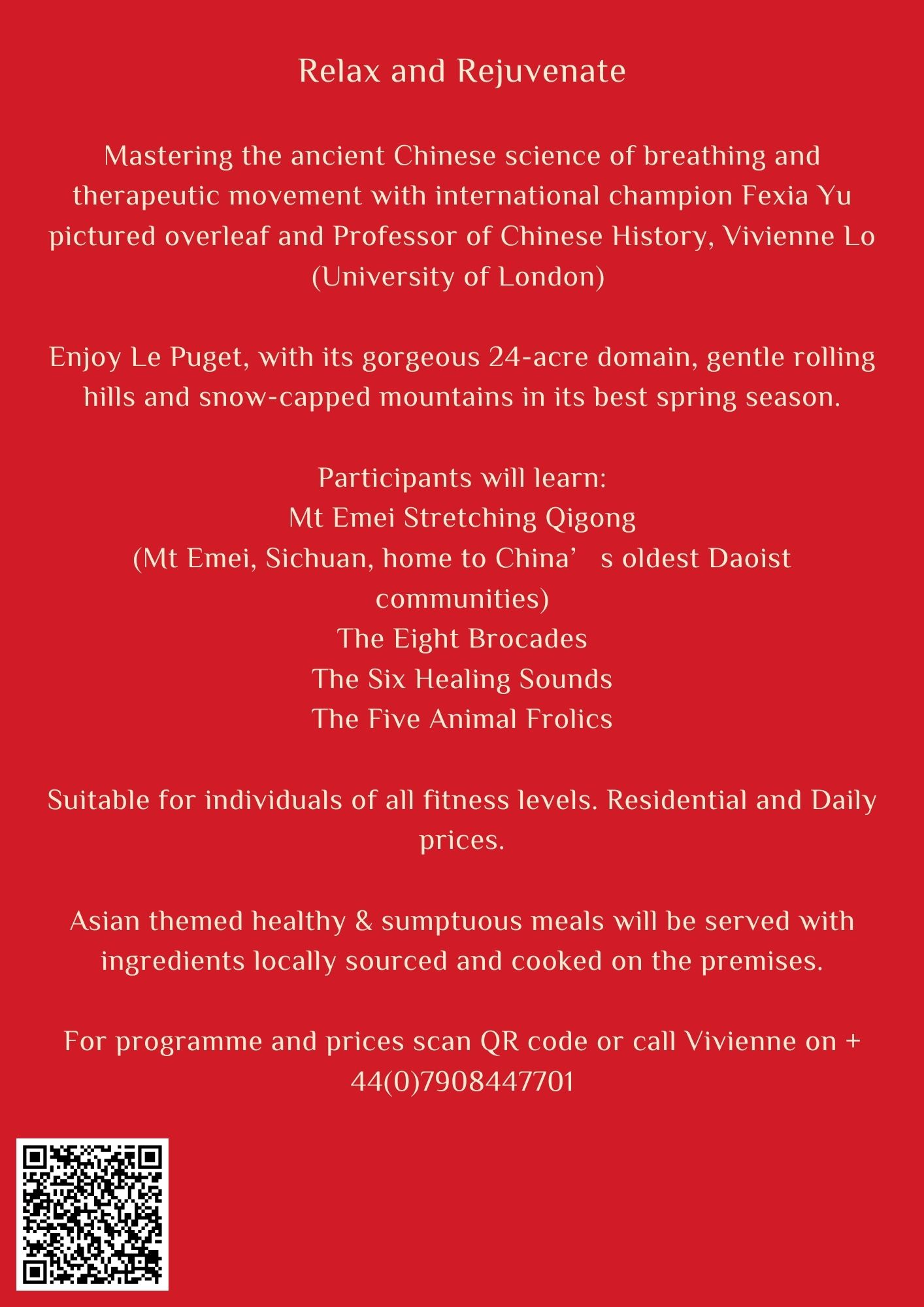
Qigong Retreat with Feixia Yu in The South of France, May 2026

Once or twice a year we run Qigong seminars with guest instructor Feixia Yu to supplement our weekly Qigong classes.

The seminars are always popular and places are snapped up quickly because Feixia is such a wonderful instructor with a wealth of experience. One of our annual seminars is usually in celebration of the Lunar New Year, but unfortunately our events had to be cancelled this year.

While we are planning on holding our regular Autumn seminar, it already seems like an age since we saw Feixia, so some of you might be interested in filling that temporal hole. Well you can. What's more, you can combine it with a week's break offering gorgeous weather and beautiful views!

Click on either image, or scan the QR code below for more information or to book.


Gōngxǐ Fācái 恭喜发财 - Happy New Year

Happy (Lunar) New Year!
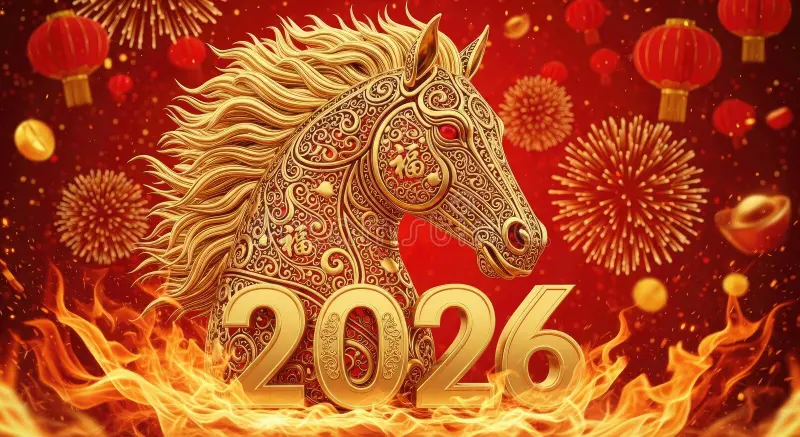
2026 is the year of the Horse. We usually celebrate the New Year with a day of Tai Chi and Qigong practice followed by an evening out at our favourite Chinese restaurant, Tang KTV. Unfortunately, due to circumstances beyond our control, we're unable to hold our usual events and will be rescheduling them for later in the year. As we aren't celebrating physically, I thought it might be a nice idea to talk a little about how we can view the horse in terms of our Tai Chi.

The Chinese Year of the Horse reflects a symbolism that resonates deeply with both ancient philosophy and internal arts such as Tai Chi. Within the Chinese zodiac, each year is represented by an animal and the horse holds the seventh position in this repeating cycle. It's traditionally associated with strength, vitality, courage, loyalty, and freedom, all of which are qualities venerated in Chinese culture.

We can think of horse as representing movement and forward momentum. It doesn't hesitate, but rather commits fully. There's an old Chinese expression: "ma dao cheng gong", which translates roughly as “success arrives with the horse”, reflecting the idea of swift progress and decisive action. The idea of purposeful motion could be considered analogous to our Tai Chi practice. Although Tai Chi largely appears slow and gentle on the surface, beneath that calm exterior lies intent, direction, and continuity. Like the horse, our movement whilst practising Tai Chi never truly stops. Even in stillness, there is potential energy waiting to be released.

The horse can also be considered in terms of Yin - Yang theory. Yin and Yang describe the opposite and yet complementary forces which underpin all existence. Yin represents stillness, receptivity, and grounding, whilst Yang represents activity, expansion, and expression. The horse is unmistakably a Yang symbol embodying activity, warmth, and dynamic expression. Yet, like all Yang forces, it cannot exist without Yin. A horse at full gallop relies upon a momentary pause between each stride. Motion arises from stillness, and stillness prepares the way for motion.

This principle is at the very heart of Tai Chi. Every step emerges from rootedness. Every extension is supported by relaxation. Yin Yang theory tells us that movement and stillness are not opposites, but rather phases of the same cycle. The horse expresses this perfectly. It is powerful, but also sensitive. Responsive, yet grounded. Without balance, its strength would become instability.

In our Tai Chi practice we make direct references to the horse: The Horse Stance develops strength, stability, endurance, and structural integrity. It teaches patience and rooting, providing the foundation from which fluid movement can emerge. Without a stable base, motion loses its integrity. The horse teaches us that true freedom of movement comes from disciplined structure.

In Chen Tai Chi, the movement Part the Wild Horse’s Mane expresses calm control combined with a forward intention. The imagery is of gently separating a horse’s mane, not through force, but through sensitivity and guidance. One hand rises as the other settles, embodying the balance of Yin and Yang. Expansion and rooting occurring simultaneously. The body advances with quiet confidence, driven from the centre and expressed through relaxed, spiralling limbs. This movement teaches us that true power does not come from tension, but from coordinated, whole-body connection. Like approaching a spirited horse, it requires presence, steadiness, and respect. The practitioner learns to move forward without aggression, maintaining balance, structure, and inner calm. In this way, the movement reflects the deeper Tai Chi principle of strength guided by softness and motion governed by awareness.

In the spirit of the Horse, take a moment to reflect upon momentum in your own life. Set aside frantic activity in favour of purposeful direction. Even when the path is uncertain, continue to move forwards with courage and resilience. At the same time, Yin and Yang remind us that all progress should be balanced with stillness. Effort balanced with ease.

So you see, the horse is much more than just a symbol of speed. It's a reminder of harmony in motion. Strength guided by balance. Energy guided by awareness. And this, ultimately, is the essence of Tai Chi itself.


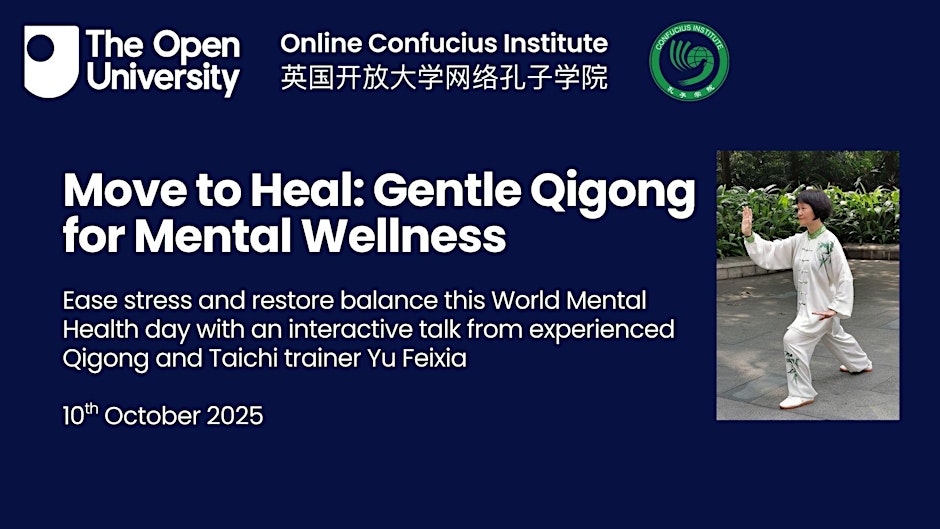
World Mental Health Day: Online Qigong with Feixia Yu

Online Qigong with Feixia Yu for World Mental Health Day

Online Qigong with Feixia Yu for World Mental Health Day
Click to book a place

This Friday 10th October our good friend and accomplished Qigong teacher Feixia Yu (who brought home two gold medals from this summer’s World Qigong Tournament in Vancouver) will be hosting a special online event to celebrate World Mental Health Day.

The session, called “Move to Heal: Gentle Qigong for Mental Wellness”, is a chance to explore how simple, mindful movement can ease stress, lift mood, and restore balance in our everyday lives.

Understanding Qi and Mental Wellbeing

Feixia will start by looking at the concept of Qi, the life force that flows through all of us. She’ll talk about how imbalances in Qi, whether it’s lacking or overactive, can affect how we feel emotionally, sometimes showing up as anxiety, low mood, or general fatigue. Understanding this connection can help us see how working with Qi through Qigong supports both body and mind.

Movement, Breath and Calm

From there, Feixia will explore the powerful link between movement, breathing, and emotional balance. She’ll show how gentle Qigong exercises, combined with mindful breathing, can create a smoother, more harmonious flow of energy. This not only helps reduce stress but also promotes a sense of calm and wellbeing — something most of us could use a little more of!

A Hands-On Experience

The event will be interactive and practical. Feixia will guide participants through a few easy-to-follow Qigong movements and some simple grounding techniques based on mindfulness and body awareness. The aim is for everyone to experience how subtle shifts in posture and breath can create noticeable changes in how we feel.

By the end of the session, you’ll have a short routine you can use at home whenever you need to restore balance, ease tension, or simply take a few moments for yourself.

Join In

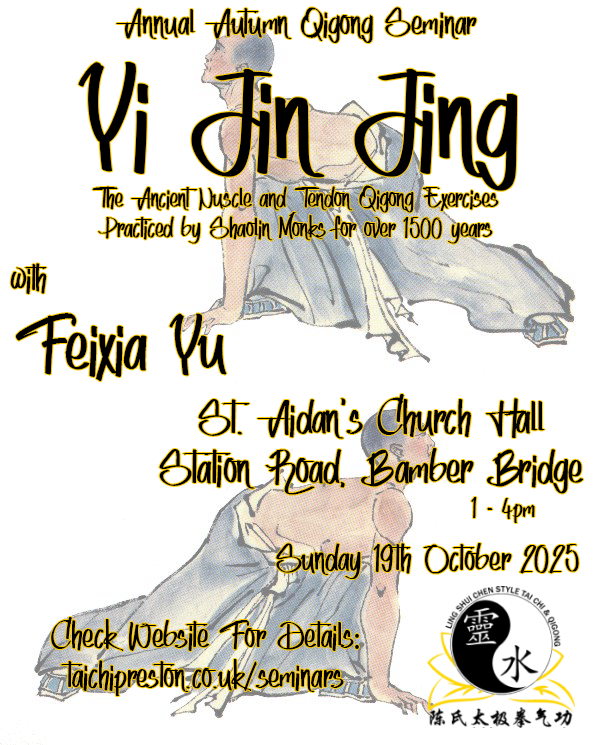
Yi Jin Jing Revisited

Our Autumn Qigong seminar seems to have become something of a tradition, so in order not to disappoint we've invited the wonderful Feixia Yu back again to share some of her extensive knowledge.

Our first Autumn seminar was back in November 2021 as the country was finally getting back to normal after Covid had knocked the world for six. At that first seminar Feixia took us through the ancient Shaolin qigong exercises known collectively as the Yi Jin Jing, so we thought it might be useful to revisit the routine and jog a few memories.

Click image above to reserve a place

For more information about the seminar, or to reserve a place, head over to our seminars page.

Qigong and Ehlers-Danlos Syndrome (EDS)

Living with Ehlers-Danlos Syndrome (EDS) can be incredibly challenging, with symptoms like chronic pain, fatigue, and limited mobility often impacting daily life. For some, Qigong (a gentle, ancient Chinese practice combining slow movements, meditation, and breathing) has offered a surprising and effective way to manage symptoms.

Originally developed over 5,000 years ago, Qigong is rooted in Chinese medicine and martial arts. Unlike more strenuous forms of exercise, Qigong is accessible for those with physical limitations. Its flowing, low-impact movements can be done standing, sitting, or even in short sessions, making it adaptable for people with conditions like EDS.

The benefits of Qigong for EDS sufferers are profound. Its gentle movements help build strength and improve flexibility without straining the body, while the focus on breathwork and mindfulness promotes relaxation and reduces stress (a key factor in managing chronic pain). Many who practise Qigong report feeling energised, more mobile, and less reliant on medication.

If you’re curious about how Qigong can help alleviate EDS symptoms, this BBC article shares an inspiring story of recovery and resilience. It’s a fascinating glimpse into how this ancient practice is making a modern impact on lives.

Happy Anniversary!

In September 2015 Ling Shui opened the doors on our Saturday morning Bamber Bridge class for the very first time. Since that humble beginning, we've moved location three times, weathered a global pandemic and openend up another five weekly classes in various locations.

In order to mark our first 10 years we'll be organising a number of events throughout the year, kicking off with the second instalment of our "Xin Jia First 15" seminar later this month. February sees our annual Chinese New Year celebrations to welcome in the year of the Snake with a full day of Tai Chi/Qigong, followed by a Chinese banquet in the evening. In September we'll be joined by guest instructor

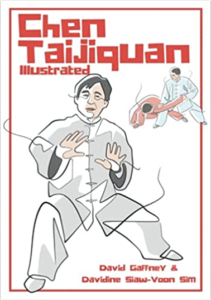
Chen Taijiquan Illustrated by David Gaffney & Davidine Sim

David Gaffney for an afternoon seminar looking at Lao Jia Yilu. In addition to running The officially affiliated UK branch of the Chen Jiagou school, David is an accomplished author with several Tai Chi books to his name including "Chen Taijiquan Illustrated", which we recommend as a course handbook to all new students. We'll also be running our other usual Tai Chi and Qigong seminars throughout the year.

As if that wasn't enough, we'll be sending a delegation to take part in Master Chen Ziqiang's March seminar, Master Wang Hai Jun's residential double sabre seminar in April and Grand Master Chen Zhenglei's annual UK seminar in May. That's not to mention our various weekly classes in Penwortham, Bamber Bridge, Chorley, Lostock Hall and Tarleton.

While it's the quality of your practice that really matters, it doesn't hurt to look good while you're at it. To that end, we thought we'd milk the 10th anniversary concept for all it was worth and have put together some rather glamorous t-shirts and hoodies to set you apart from the hoi polloi. You'll find details and an order form here in our members area.

With so much happening this year, it's the perfect time to join us, so if you've been curious to find out more about Tai Chi there's no better time to take the plunge. Head over to our Beginners page and book your place now!

The Ancient Art of Liu Zi Jue: Harnessing the Power of the Five Healing Sounds

The Liu Zi Jue, also known as the Six Healing Sounds, holds a special place in Traditional Chinese Medicine (TCM) offering a unique approach to health and well-being. We're delighted to announce that Feixia Yu from the UCLan Confucius Institute will be joining us this October for an afternoon learning and practicing this ancient health Qigong exercise.

Click to reserve a place at our Autumn Liu Zi Jue seminar

Liu Zi Jue, which translates to “Six Word Formula,” dates back over a thousand years. The earliest written records can be traced to the Southern and Northern Dynasties (420-589 AD), making it one of the oldest known Qigong practices. The exercises were further refined and popularised during the Tang (618-907 AD) and Song (960-1279 AD) Dynasties. Over the centuries, respected TCM practitioners and scholars documented its techniques and benefits and today it's deeply embedded into the fabric of Chinese health practices.

The essence of Liu Zi Jue lies in its simplicity and profound effectiveness. Each of the six sounds corresponds to a different organ and meridian in the body. The sounds, when pronounced correctly, are believed to vibrate specific organs, expelling stagnant Qi (vital energy) and replenishing it with fresh, vital energy. This practice aligns with the TCM philosophy of maintaining balance and harmony within the body to ensure health and vitality.

The video below features Master Faye Yip from the British Health Qigong Association demonstrating the form:

The Six Healing Sounds Explained

The Liu Zi Jue sequence involves six distinct sounds, each associated with a particular organ and its corresponding element:

  1. Xu (Shu) – Liver (Wood)
  2. He (Her) – Heart (Fire)
  3. Hu (Hoo) – Spleen (Earth)
  4. Si (Sss) – Lungs (Metal)
  5. Chui (Chway) – Kidneys (Water)
  6. Xi (Shee) – San Jiao (Triple Burner/Heater)

Practitioners of Liu Zi Jue perform these sounds while engaging in gentle, flowing movements. This combination of vocalisation and motion is designed to stimulate the internal organs, promoting the smooth flow of Qi and aiding in the detoxification and revitalisation processes.

Health Benefits According to Traditional Chinese Medicine

The benefits of Liu Zi Jue are extensive and multifaceted, reflecting the holistic nature of TCM. Here are some key advantages:

  1. Enhancing Qi Circulation: By clearing blockages and ensuring the free flow of Qi, Liu Zi Jue helps maintain overall energy balance. This is crucial for preventing illness and sustaining vitality.
  2. Detoxifying the Organs: The vibrations produced by the specific sounds help in detoxifying the organs, expelling toxins, and rejuvenating organ function.
  3. Boosting Immunity: Regular practice strengthens the immune system, making the body more resilient against infections and diseases.
  4. Reducing Stress and Anxiety: The meditative aspect of the practice, combined with controlled breathing and sound production, has a calming effect on the mind, reducing stress and anxiety levels.
  5. Improving Respiratory Health: Particularly the “Si” sound for the lungs, helps in clearing respiratory pathways, making it beneficial for individuals with respiratory issues.
  6. Supporting Digestive Health: The “Hu” sound targets the spleen and stomach, aiding in digestion and improving metabolic processes.

Embracing Liu Zi Jue Today

In today’s frenetic world, the gentle practice of Liu Zi Jue offers a sanctuary of calm and healing. Whether you’re seeking to enhance your physical health, manage stress, or simply explore an ancient tradition, incorporating the Six Healing Sounds into your daily routine can be immensely rewarding.

The beauty of Liu Zi Jue lies in its accessibility. You don’t need any special equipment or a specific location, just a quiet space where you can focus on your breath, sounds, and movements.

With that in mind, we're delighted to announce that accomplished Qigong practitioner and instructor Feixia Yu will be joining us this Autumn for an afternoon learning and practising Liu Zi Jue and Qigong meditation. The seminar will be taking place in St. Aidan's Church Hall, Bamber Bridge from 1 - 4pm on Saturday 5th October and is sure to be popular, so head over to our Seminar booking page to reserve your place now.

Free Qigong Classes Are Back!

Our popular Thursday early evening Qigong for Health classes have returned to  Tarleton Library, with funding secured to provide sessions for the foreseeable future.

The classes are open to the public and free of charge but places are limited, so you'll need to pop into the library to book a place if you'd like to take part. For directions to the library, click here.

The sessions are suitable for both beginners and experienced practitioners alike, with a focus on a variety of easy to learn traditional Qigong exercises aimed at promoting physical and mental wellbeing.

One of the exercise sequences you'll encounter at the session is the Ba Duan Jin, also known as the “Eight Pieces of Brocade”. It's a traditional form of Qigong that's been practised in China for nearly a thousand years.

Its origins can be traced back to the Song Dynasty (960–1279AD). According to legend, General Yue Fei developed these exercises to improve the health and fitness of his soldiers, although historical evidence supporting this claim is limited. Regardless of its exact origins, the Ba Duan Jin has been valued in China for its simplicity and effectiveness for centuries.

The Ba Duan Jin consists of eight distinct movements, each targeting different aspects of physical and mental well-being. The term “Eight Pieces of Brocade” suggests something precious and beneficial, reflecting the value these exercises provide.

The Eight Exercises of the Ba Duan Jin


Regular practice of the the Ba Duan Jin bestows a number of health benefits, including:

Improved Flexibility and Strength: Each movement gently stretches and strengthens various muscle groups, enhancing overall flexibility and muscle tone.

Better Balance and Coordination: The slow, deliberate movements of the Ba Duan Jin improve balance and coordination, which can be particularly beneficial for older adults.

Enhanced Circulation and Cardiovascular Health: The rhythmic nature of the exercises promotes blood flow and supports a healthy cardiovascular system.

Stress Reduction: The Ba Duan Jin incorporates deep breathing and mindful movement, which help to calm the mind and reduce stress levels.

Increased Energy Levels: Practitioners often report feeling more energised and alert after practising the Ba Duan Jin, due to improved circulation and balanced Qi (vital energy).

Improved Digestion: Certain movements are believed to stimulate the digestive system, promoting better digestive health.

Joint Health: The gentle, flowing motions are easy on the joints, making the Ba Duan Jin suitable for individuals with arthritis or other joint issues.

Mental Clarity and Focus: The meditative aspect of the Ba Duan Jin helps to clear the mind, enhancing concentration and mental clarity.

The relatively gentle and straightforward exercises of the Ba Duan Jin make it accessible to people of all ages and fitness levels. It provides an holistic approach to health, benefiting the body, mind, and spirit.

Here's a video of Master Faye Yip from the Chinese Health Qigong Association UK demonstrating the exercises:

If your interest is piqued, why not join us at Tarleton Library every Thursday at 4pm, or in St. Aidan's Church Hall in Bamber Bridge at 11am on a Saturday morning? You'll find full details of all our sessions on our website, here.