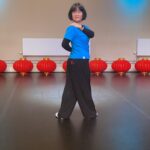
Last month we were joined in our Chinese New Year celebrations by UCLan Confucius Institute's director, Feixia Yu, for an afternoon studying and practicing the Ba Duan Jin. This wasn't the first time that Feixia has been gracious enough to act as a guest instructor for us and all of the many people who've attended her seminars over the last few years will know just what an outstanding teacher she is.
This May, Feixia will be hosting a week long Qigong retreat in Le Puget, France. She'll be joined on the retreat by Professor Vivienne Lo and Dr. Dolly Yang, both of whom are experts in Chinese culture and medicine.
The retreat will offer a chance to explore the finer details of the movements, acupuncture points and energy flows, along the associated meridians, in the four classical qigong routines: Baduanjin, Yijinjing, Five-Animal Frolics and Six Healing Sounds.
Click the image below for further details and to book a place at the retreat.
Click for more details, or to book yourself a place
Each year we like to mark the advent of the lunar New Year with a day of Tai Chi related events. This year was no different and started at 10am on New Year's Day with a 2 ½ hour Tai Chi session involving silk reeling exercises, a little Zhan Zhuang meditative standing and practice and correction of Lao Jia Yilu section 1.
The afternoon saw guest instructor Feixia Yu from UCLan's Confucius Institute lead us in a detailed look at the ancient Ba Duan Jin Qigong exercises in between cups of green tea and New Year sweet treats.
After a short break to freshen up, those of us with time and energy left gathered for a couple of drinks before heading to Tang TV Chinese Restaurant in Preston for a fantastic banquet.
I think it's safe to say that a great day was had by everyone who attended any or all of the events. You'll find photographic proof in our Seminars photo gallery, here.
When I first began my Tai Chi journey 14 years ago, a phrase I heard repeated regularly was that to learn Tai Chi is to learn a new way of moving. Other concepts such as the Dantien, internal connections and the spiralling, circling nature of the movements were impressed on me again and again as I progressed in my training which, over time, began to make sense as I became increasingly aware of how my body felt during practice.
These concepts can seem a little esoteric for a new student more familiar with the ideas of Newtonian mechanics and cause and effect than with the Chinese concepts of Yin Yang, Qi and meridians. When introducing new students to Tai Chi I find it helpful to explain these ideas using concepts that are more familiar to the western mind such as potential/kinetic energy and elasticity.
In recent years, western medicine has increasingly begun to investigate and understand the role the fascia plays in the body. I'd like to suggest that it's the fascia which provides the internal connections we feel during practice and act as the medium through which forces/energy/Qi flows around the body.
If we balance on one leg, our body will make tiny internal adjustments to muscles and tendons in the supporting leg to help us balance. The body achieves this in part by means of proprioception, an unconscious process which happens automatically without the need for conscious engagement. As we progress in our practice, we aim to develop an ability to manipulate these subconscious processes in order to initiate and augment movement in the body without the usual recourse to the consciously controlled muscles we're all familiar with such as biceps, triceps, quadriceps or hamstrings. I find it helpful to think of the Chinese concept of shen as being, in part, this process of harnessing conscious control the tendons and muscles associated with the fascia in order to initiate movement and deliver additional power.
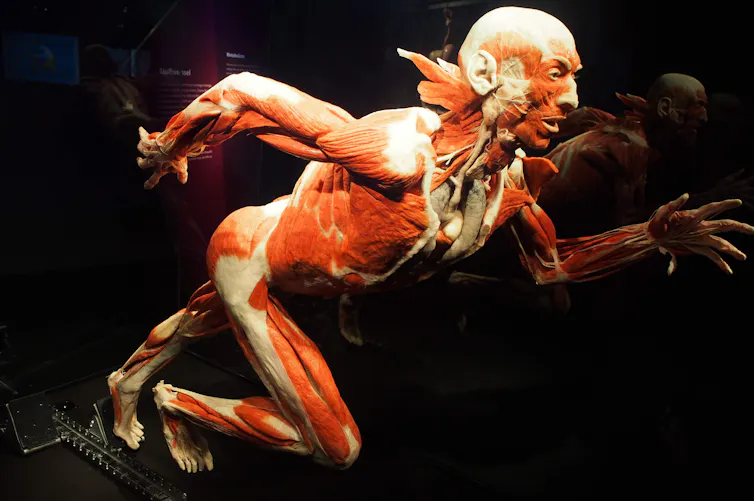
In my opinion, it isn't a great leap to imagine that the fascia and associated muscles and tendons are a significant physiological factor in the Tai Chi experience. The article below talks about the fascia, the role it plays in the body and it's importance to our muscle and bone health and will hopefully give you some food for thought when you next practice your forms...
Fascia: the most neglected part of our body is finally starting to receive attention
We are constantly reminded about how exercise benefits our bone and muscle health or reduces fat. However, there is also a growing interest in one element of our anatomy that is often overlooked: our fascia.
Fascia is a thin casing of connective tissue, mainly made of collagen – a rope-like structure that provides strength and protection to many areas of the body. It surrounds and holds every organ, blood vessel, bone, nerve fibre and muscle in place. And scientists increasingly recognise its importance in muscle and bone health.
It is hard to see fascia in the body, but you can get a sense of what it looks like if you look at a steak. It is the thin white streaks on the surface or between layers of the meat.
Fascia provides general and special functions in the body, and is arranged in several ways. The closest to the surface is the superficial fascia, which is underneath the skin between layers of fat. Then we have the deep fascia that covers the muscles, bones and blood vessels.
The link between fascia, muscle and bone health and function is reinforced by recent studies that show the important role fascia has in helping the muscles work, by assisting the contraction of the muscle cells to generate force and affecting muscle stiffness.
Each muscle is wrapped in fascia. These layers are important as they enable muscles that sit next to, or on top of, each other to move freely without affecting each other’s functions.
Fascia also assists in the transition of force through the musculoskeletal system. An example of this is our ankle, where the achilles tendon transfers force into the plantar fascia. This sees forces moving vertically down through the achilles and then transferred horizontally into the bottom of the foot - the plantar fascia – when moving.
Similar force transition is seen from muscles in the chest running down through to groups of muscles in the forearm. There are similar fascia connective chains through other areas of the body.
When fascia gets damaged
When fascia doesn’t function properly, such as after injury, the layers become less able to facilitate movement over each other or help transfer force. Injury to fascia takes a long time to repair, probably because it possesses similar cells to tendons (fibroblasts), and has a limited blood supply.
Recently, fascia, particularly the layers close to the surface, have been shown to have the second-highest number of nerves after the skin. The fascial linings of muscles have also been linked to pain from surgery to musculoskeletal injuries from sports, exercise and ageing. Up to 30% of people with musculoskeletal pain may have fascial involvement or fascia may be the cause.
A type of massage called fascial manipulation, developed by Italian physiotherapist Luigi Stecco in the 1980s, has been shown to improve the pain from patellar tendinopathy (pain in the tendon below the kneecap), both in the short and long term.
Fascial manipulation has also shown positive results in treating chronic shoulder pain.
One of the growing trends for helping with musculoskeletal injuries is Kinesio tape, which is often used in professional sports, although evidence for its effectiveness is mixed. It is also being used to complement the function of the fascia, and is used to treat chronic lower back pain where fascial involvement is a factor.
The spaces between fascial layers are usually closed (think of cling film being folded over), but when an infection occurs, germs can spread between these layers. This is a particular problem in the neck, where there are several layers of fascia for infections to travel along.
In severe cases, surgery is often needed to remove the dead tissue and save the healthy remaining tissue.
One of the primary examples of fascia functioning in health, and the challenges its dysfunction can bring, is seen in the common complaint plantar fasciitis, which causes pain on around the heel and arch of the foot.
This incredibly common ailment affects 5-7% of people, rising to 22% in athletes. It is recognised as an overuse injury, causing the thickening of the fascial bands on the soles of the feet that help give the arch support.
Fascia can also be implicated in more serious health conditions, such as necrotising fasciitis. This is a rare but serious bacterial condition that can spread through the body quickly and cause death.
The condition is almost always caused by bacteria, specifically group A Streptococcus or Staphylococcus aureus. The initial infection comes from a cut or scratch, and then the bacteria travel along the fascia to other areas away from the initial site of access and multiply in the ideal environment afforded by the warm recesses of the body.
We can see it better now
One reason fascia has been overlooked in health and disease is because it was difficult to see using current imaging technology. More recently, though, MRI and ultrasound imaging have been shown to be beneficial in visualising fascia, particularly in musculoskeletal conditions such as plantar fasciitis, and pathological changes in the fascia of the shoulder and neck.
With the growing interest in fascia and the growing understanding of its contribution to musculoskeletal health, it’s sensible to suggest that we look after it in the same way we do with the rest of the musculoskeletal system - by using it. Simple techniques like foam rollers and stretching are beneficial in increasing mobility, but there is still much to learn about our fascia and the role it plays in our day-to-day health.
Clarification. The sentence: “One of the growing trends for helping with musculoskeletal injuries is Kinesio tape, which is often used in professional sports” has been amended to make it clear that evidence for the tape’s effectiveness is mixed.
Did you know that it's World Qigong Day this coming Saturday, 9th September?
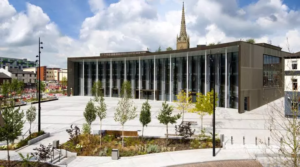
We're fortunate enough to have the opportunity to practice every Saturday morning (see our classes page), but for those not able to join us, The UCLan Confucius Institute will host a World Health Qigong Day Wellbeing celebration on the University Square from 1:00 to 2:30pm.
The event is free of charge, but booking is required in order to take part. The workshop will be lead by Ms. Feixia Yu, Director of the UCLan Confucius Institute and a regular guest instructor at Ling Shui seminars. A double silver medallist at this year's 10th World Health Qigong Tournament in Tokyo, Feixia is not only an accomplished practitioner but also a wonderful teacher and this is a great opportunity to practice with her in the heart of Preston.
The workshop will be of low to medium intensity, combining gentle stretches with deep breathing and is suitable for all levels of fitness. The event will also be broadcast on Zoom for those who would love to join in but can't be there in person.
We'll be returning to Tarleton Library for 30 weeks commencing on Thursday 20th July 2023 to host another run of free weekly Qigong sessions from 4:00 - 4:55pm. Our previous course proved very popular, so book a place now to avoid missing out!
You can book a place by popping into the library or via the library website
We try to organise a few seminars during the course of the year. The seminars offer students the opportunity to study with talented instructors from the UK Chen Tai Chi community and cover a range of topics including Tai Chi forms, weapons and Qigong exercise forms and are always popular.
Saturday 21st January saw us gather for an afternoon studying the Daoyin Yangsheng Gong Shi Er Fa 12 Exercises with Feixia Yu, Director of the UCLAN Confucius Institute and accomplished BHQA Qigong Instructor. As always, the session was at times challenging but hugely informative and satisfying for everyone who attended.
The seminar was intended to mark the arrival of the Year of the Rabbit and, in keeping with club tradition, was followed by a few drinks and a magnificent banquet at Preston's finest Chinese restaurant, Tang KTV
You'll find photos from the seminar (although not the meal - we were too busy stuffing our faces to think about taking photos!) on our seminar page.
Gōngxǐ Fācái 恭喜发财
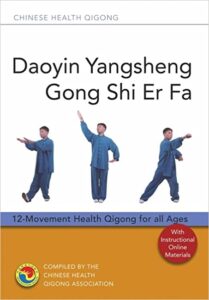
If you were at the seminar or are just interested in learning the Daoyin 12 Exercises, the Chinese Health Qigong Association have a great little book that comes with a link to download comprehensive training videos. Click the image below to find the book on Amazon:
We like to celebrate Chinese New Year with a seminar in the afternoon and a Chinese banquet in the evening. This year we're delighted to welcome the wonderful Feixia Yu for an afternoon learning the Daoyin 12 Qigong for Health sequence.
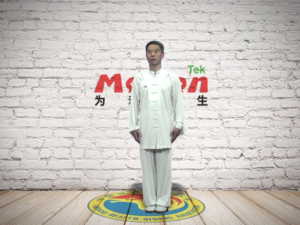
Professor Yang Yubing from Beijing Sport University demonstrates Daoyin 12
The Traditional Chinese Medicine (TCM) paradigm can be difficult to understand in relation to the Western Scientific/Medical model that most of us are familiar with. Many of the ancient Chinese texts can seem difficult to interpret without the appropriate cultural knowledge. Despite this there's no shortage of people sharing internet memes with quotes from texts such as the Dao De Jing. Whilst these writings do indeed offer some profound insights into the business of being a human being, those insights are often only really available to those with sufficient understanding of the contextual culture and metaphor surrounding them. To many people I suspect they evoke a sense of the profound, whilst actually communicating very little.
By way of contrast, the reality of TCM is that it's an ancient practice which is the result of millennia of observations of illnesses, diseases and the human condition in general, and the efficacy of certain natural treatments, exercises and remedies. Whilst the explanatory framework is somewhat figurative, it doesn't invalidate the observations or proposed treatments. Indeed, modern medicine is only now waking up to the links between mental health and gut health, or the importance of the facial layer in referred pain, both of which are accommodated within the TCM framework.
I find it helpful when western scientific research concurs with the Chinese model. As a Western student of Tai Chi and Qigong with an educational background in the sciences, such confirmations provide a greater insight into how two such different paradigms can both have merit and comfortably co-exist.
This report, pulling together research from around the world, demonstrates the very real benefits that regular practice of Tai Chi and Qigong can bestow upon the practitioner. It's a bit of a dry read for those who don't make a habit of reading science papers, so let me spoil the report for everyone by sharing its conclusions with you here:
"A compelling body of research emerges when Tai Chi studies and the growing body of Qigong studies are combined. The evidence suggests that a wide range of health benefits accrue in response to these meditative movement forms, some consistently so, and some with limitations in the findings thus far. This review has identified numerous outcomes with varying levels of evidence for the efficacy for Qigong and Tai Chi, including bone health, cardiopulmonary fitness and related biomarkers, physical function, falls prevention and balance, general quality of life and patient reported outcomes, immunity, and psychological factors such as anxiety, depression and self-efficacy. A substantial number RCTs have demonstrated consistent, positive results especially when the studies are designed with limited activity for controls. When both Tai Chi and Qigong are investigated together, as two approaches to a single category of practice, meditative movement, the magnitude of the body of research is quite impressive."
For those of you out there who do enjoy wading through the odd scientific journal, you'll find the full paper here:
A Comprehensive Review of Health Benefits of Qigong and Tai Chi
The moral of the tale? Keep doing what you're doing, as long as what you're doing is Tai Chi and Qigong!
If you aren't currently a Tai Chi or Qigong practitioner but feel compelled to find out more after reading this article, head to our Beginners page to get in touch and join us at a session.
Mawangdui, translated as 'King Ma's Mound', is an archaeological site located in Changsha, China. The site consists of two saddle shaped hills which contain three tombs. These tombs were initially thought to be those of Ma Yin, ruler of the Chu kingdom between 853 and 930AD, giving rise to the erroneous name Mawangdui.
It was subsequently established that the tombs actually dated back to the Western Han dynasty (206 BC – 9 AD) and were those of the Chancellor Li Cang, his wife Xin Zhui, and a male believed to have been their son. It's now thought that the original name may have been mis-interpreted and should in fact be the similarly sounding "Ma an dui" meaning "saddle-shaped mound" in reference to the geography of the hills containing the tombs.
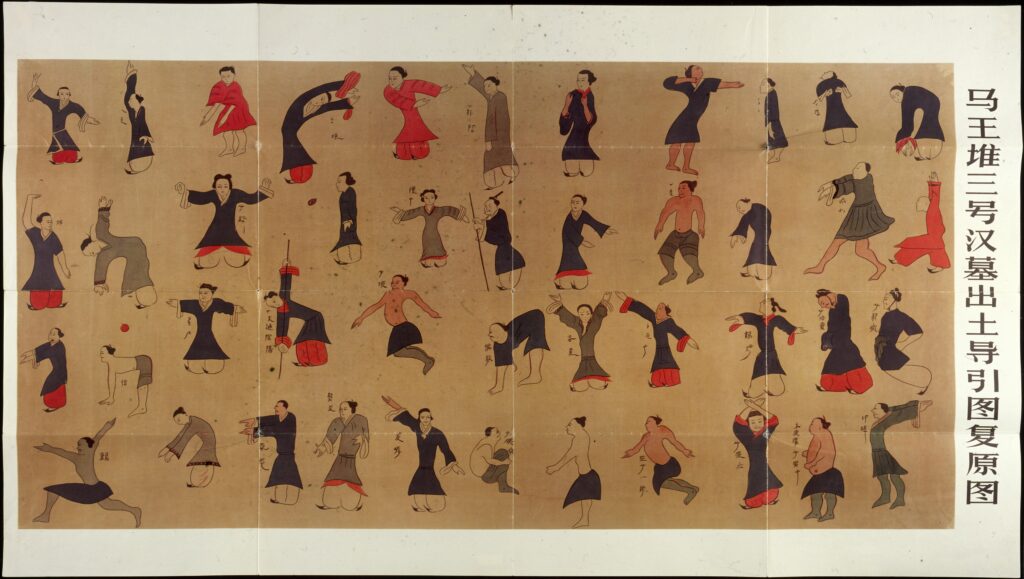
The tombs contained well preserved mummified remains and a wealth of other artefacts including a number of Chinese philosophical and medical works written on silk. Known as The Mawangdui Silk Texts, they include some of the earliest manuscripts of existing texts such as the I Ching and the Tao Te Ching. In addition to these and other works were numerous previously unknown medical texts. These medical texts included depictions of Daoyin (Qigong) exercises which are today known as the Mawangdui Daoyin Shu.
Ancient Illustration of the Mawangdui Daoyin Shu Movements
Consisting of 12 easy to learn, graceful movements, the Mawangdui Daoyin Shu movements work with the flow of Qi through the meridians and encourage connection between the external movements of the body and the internal activity of the mind. Through rising and squatting, extending and withdrawing the limbs, bending and stretching, the movements help maintain health and cultivate the spirit.
We're delighted to be able to announce that guest instructor Feixia Yu from the UCLAN Confucius Institute will be joining us at the start of October to share this ancient Qigong sequence with us.
You can find a demonstration of the sequence on YouTube, here.
The seminar will be held in St. Aidan's Church Hall on Station Road in Bamber Bridge on Saturday 1st October between 1 - 4pm and is suitable for adults of all ages and abilities with no previous experience required. For more information, or to reserve a place, please visit our seminars page, here.
Feixia Yu, Director of the UCLAN Confucius Institute and fantastic Qigong instructor, will be hosting a free Daoyin Spine Alignment Qigong session in the New University Square (which used to be the Adelphi Roundabout) next Wednesday 1st June 12:30-1:00pm. Details Below
Tai Chi in the Square
Everyone is welcome to come and try the art of Tai Chi and Qigong in this short session for UCLAN staff, students and the wider community of Preston.
Please note: There is no booking required, simply turn up! The session will be held outdoors so please dress comfortably and appropriately for the session.
Modern sedentary lifestyles coupled with long hours of screen time have resulted in common complaints of headache, sore neck, tensed shoulders, or lower back pain, which are often caused by poor alignment in the spine. This can be corrected with regular practice of many of the Tai Chi and Qigong routines which consist of gentle but effective stretches.
Join this FREE class delivered by Senior Instructor Feixia Yu. The gentle movements coupled with deep breathing also calm the mind and release both physical and mental stress.

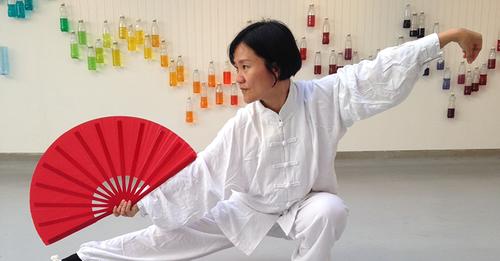


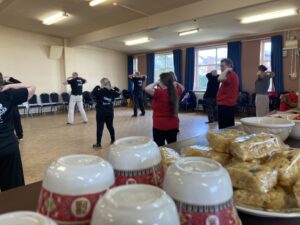 Each year we like to mark the advent of the lunar New Year with a day of Tai Chi related events. This year was no different and started at 10am on New Year's Day with a 2 ½ hour Tai Chi session involving silk reeling exercises, a little Zhan Zhuang meditative standing and practice and correction of Lao Jia Yilu section 1.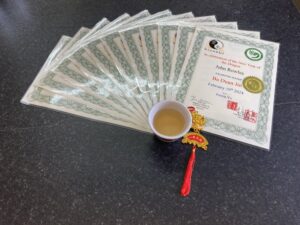
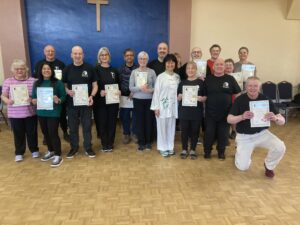 left gathered for a couple of drinks before heading to Tang TV Chinese Restaurant in Preston for a fantastic banquet.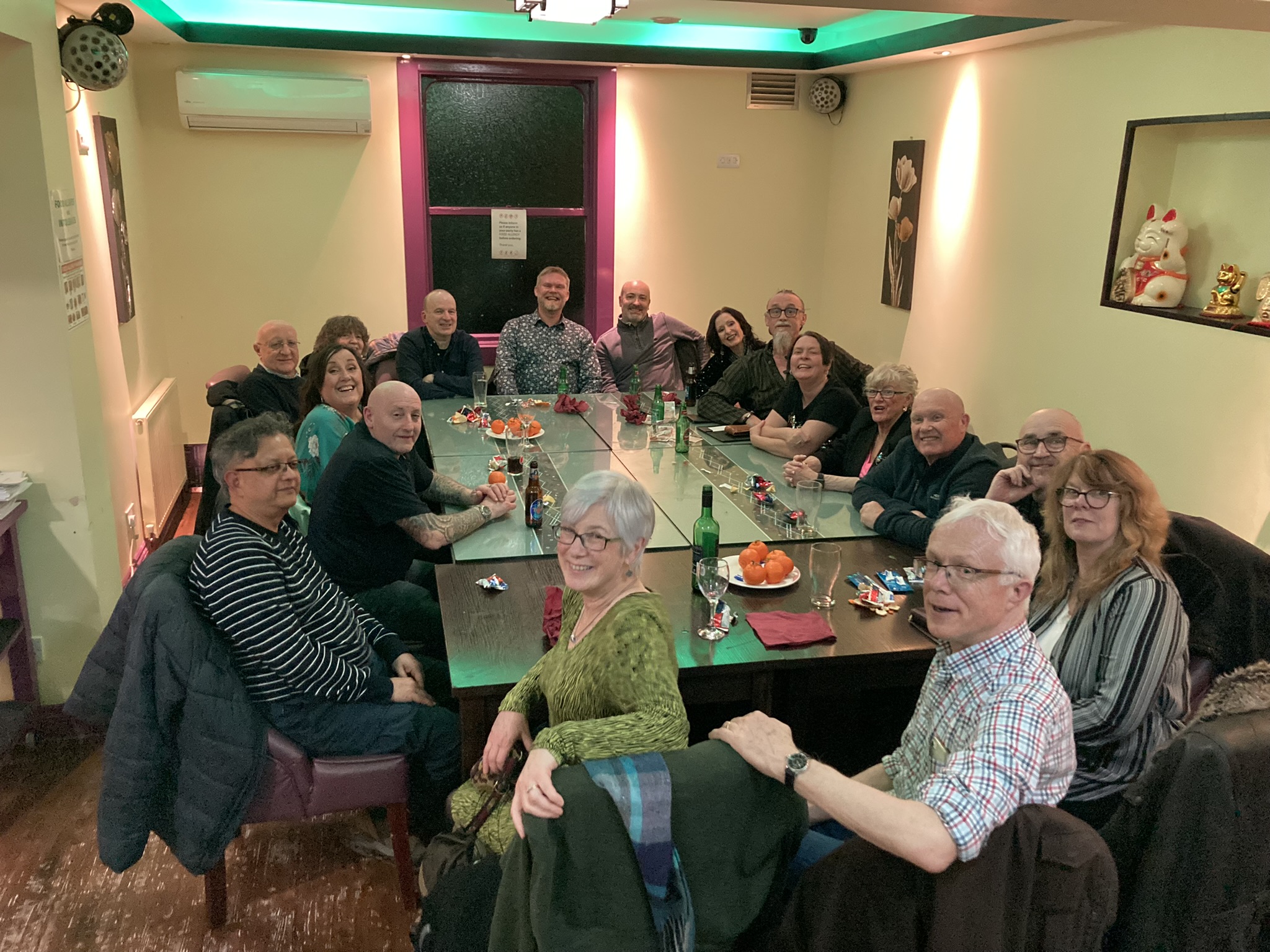




 We're delighted to be able to announce that guest instructor Feixia Yu from the