During an expedition down an internet wormhole I came across a BBC news article talking about the benefits of Tai Chi for sufferers of Parkinson's disease. The BBC article went on to show a couple of Yang Shi Ba Shi Qigong exercises labelled as Tai Chi. Anyone with more than a passing knowledge of the subject knows that Qigong exercises are not Tai Chi (although it could be said that Tai Chi is a subset of Qigong in so far as they both involve cultivation of internal energy). I'm petty enough to be irritated by this sort of inaccuracy, so I decided to dive a little deeper...
The article was based on a study first published by the Journal of Neurology, Neurosurgery & Psychiatry in October 2023. The paper was based on an average of 3.5 years' observation of groups practising Tai Chi twice a week for 60 minutes per session. The Tai Chi coaches were from a professional organisation called Sino Tai Chi who, after a little more digging online, I believe to be a Chen style Tai Chi organisation.
The study compared the persistent Tai Chi training group with a control group who didn't engage in any regular exercise beyond their usual daily activity. Compared with the control group, the people who maintained Tai Chi training showed a slower annual worsening of overall Parkinson's symptoms. In addition, they required lower annual increases in the daily dosage of their medication, exhibited a delayed progression into further anti-Parkinsonian therapy and demonstrated greater stability and improvements in motor function tests such as balance and gait.
In addition, the Tai Chi participants showed a slower deterioration in cognitive function, autonomic symptoms, sleep quality and overall quality of life. They also exhibited a lower prevalence of motor and non-motor complications such as dyskinesia, cognitive impairment/dementia, drops in blood pressure and impulse control disorders.
The Tai Chi practitioners did report falls, dizziness and back pain, but these phenomena weren't significantly higher than those experienced by the control group.
In summary, the study suggests that persistent long-term Tai Chi training when delivered correctly is associated with slower symptom progression and improved functional outcomes in people with Parkinson's disease compared to people not engaged in regular training. Whilst it doesn't prove causation, it does provide compelling evidence that sustained physical training such as Tai Chi can be beneficial in long term management of Parkinson's disease.
2026 is the year of the Horse. We usually celebrate the New Year with a day of Tai Chi and Qigong practice followed by an evening out at our favourite Chinese restaurant, Tang KTV. Unfortunately, due to circumstances beyond our control, we're unable to hold our usual events and will be rescheduling them for later in the year. As we aren't celebrating physically, I thought it might be a nice idea to talk a little about how we can view the horse in terms of our Tai Chi.
The Chinese Year of the Horse reflects a symbolism that resonates deeply with both ancient philosophy and internal arts such as Tai Chi. Within the Chinese zodiac, each year is represented by an animal and the horse holds the seventh position in this repeating cycle. It's traditionally associated with strength, vitality, courage, loyalty, and freedom, all of which are qualities venerated in Chinese culture.
We can think of horse as representing movement and forward momentum. It doesn't hesitate, but rather commits fully. There's an old Chinese expression: "ma dao cheng gong", which translates roughly as “success arrives with the horse”, reflecting the idea of swift progress and decisive action. The idea of purposeful motion could be considered analogous to our Tai Chi practice. Although Tai Chi largely appears slow and gentle on the surface, beneath that calm exterior lies intent, direction, and continuity. Like the horse, our movement whilst practising Tai Chi never truly stops. Even in stillness, there is potential energy waiting to be released.
The horse can also be considered in terms of Yin - Yang theory. Yin and Yang describe the opposite and yet complementary forces which underpin all existence. Yin represents stillness, receptivity, and grounding, whilst Yang represents activity, expansion, and expression. The horse is unmistakably a Yang symbol embodying activity, warmth, and dynamic expression. Yet, like all Yang forces, it cannot exist without Yin. A horse at full gallop relies upon a momentary pause between each stride. Motion arises from stillness, and stillness prepares the way for motion.
This principle is at the very heart of Tai Chi. Every step emerges from rootedness. Every extension is supported by relaxation. Yin Yang theory tells us that movement and stillness are not opposites, but rather phases of the same cycle. The horse expresses this perfectly. It is powerful, but also sensitive. Responsive, yet grounded. Without balance, its strength would become instability.
In our Tai Chi practice we make direct references to the horse: The Horse Stance develops strength, stability, endurance, and structural integrity. It teaches patience and rooting, providing the foundation from which fluid movement can emerge. Without a stable base, motion loses its integrity. The horse teaches us that true freedom of movement comes from disciplined structure.
In Chen Tai Chi, the movement Part the Wild Horse’s Mane expresses calm control combined with a forward intention. The imagery is of gently separating a horse’s mane, not through force, but through sensitivity and guidance. One hand rises as the other settles, embodying the balance of Yin and Yang. Expansion and rooting occurring simultaneously. The body advances with quiet confidence, driven from the centre and expressed through relaxed, spiralling limbs. This movement teaches us that true power does not come from tension, but from coordinated, whole-body connection. Like approaching a spirited horse, it requires presence, steadiness, and respect. The practitioner learns to move forward without aggression, maintaining balance, structure, and inner calm. In this way, the movement reflects the deeper Tai Chi principle of strength guided by softness and motion governed by awareness.
In the spirit of the Horse, take a moment to reflect upon momentum in your own life. Set aside frantic activity in favour of purposeful direction. Even when the path is uncertain, continue to move forwards with courage and resilience. At the same time, Yin and Yang remind us that all progress should be balanced with stillness. Effort balanced with ease.
So you see, the horse is much more than just a symbol of speed. It's a reminder of harmony in motion. Strength guided by balance. Energy guided by awareness. And this, ultimately, is the essence of Tai Chi itself.
When trying to explain the mechanics of Tai Chi can be challenging when you're unfamiliar with the Qi paradigm. We talk about energy releasing (fajin) in association with breathing, relaxation and intent, but what does it mean from the point of view of the Western biomechanical paradigm?
We came across this YouTube short from Professor Hannah Fry recently where she talks about using the breath to open jars. Whilst she isn't thinking about Tai Chi, Qi or even general martial arts theory, she is talking about the connection that the arms have to muscles located in the back and sides of our torsos and how the breath interacts with them. An awareness of these interactions makes it easier to feel them and in feeling, to harness them. If you find it difficult to make sense of some of these concepts, take a look below and see if she can give you a lightbulb moment!
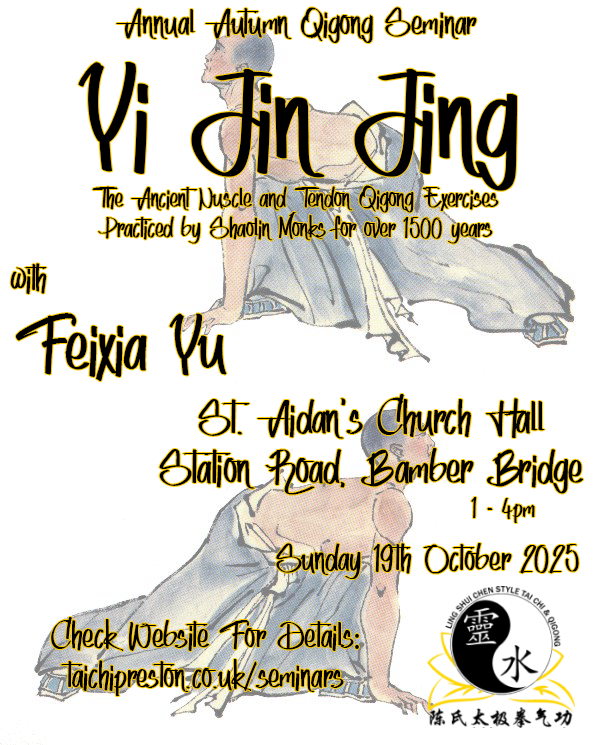
Our Autumn Qigong seminar seems to have become something of a tradition, so in order not to disappoint we've invited the wonderful Feixia Yu back again to share some of her extensive knowledge.
Our first Autumn seminar was back in November 2021 as the country was finally getting back to normal after Covid had knocked the world for six. At that first seminar Feixia took us through the ancient Shaolin qigong exercises known collectively as the Yi Jin Jing, so we thought it might be useful to revisit the routine and jog a few memories.
Click image above to reserve a place
For more information about the seminar, or to reserve a place, head over to our seminars page.
In June of this year Amelia, one of our club members, is undertaking the daunting task of scaling Kilimanjaro, Africa's tallest mountain, in order to raise money for Reuben's Retreat.
Reuben’s Retreat is a remarkable charity offering emotional and practical support to families who have suffered the loss of a child or are caring for a child with a life-limiting or complex condition. Based in the North West, they provide a warm and welcoming sanctuary where families can find peace, make precious memories, and begin to heal.
From counselling and respite breaks to wellbeing therapies and peer support, the charity is dedicated to walking alongside families through the most difficult of times, with compassion at every step.
To donate to this worthy cause and support Amelia in her challenge, click here to visit her JustGiving page. We're looking forward to the pictures of her practising her forms at the top of the world!
Clair, one of our club members, will be jogging one mile a day for Dementia UK this month.
Most of us will know someone who suffers from Dementia and just how challenging it can be. Just £8 could pay for the telephone costs of two families calling its free Dementia Helpline, so any support would be much appreciated.
In 2015 the British Journal of Sports Medicine published a study suggesting that Tai Chi is great for older adults with conditions like arthritis, COPD, and even heart issues. Researchers found it helps with pain, stiffness, and overall quality of life without making symptoms worse. The gentle, flowing movements combine relaxation with deep breathing, making it an accessible way to stay active. With evidence from over 30 studies, experts think Tai Chi could even be prescribed in the future for multiple chronic conditions.
Living with Ehlers-Danlos Syndrome (EDS) can be incredibly challenging, with symptoms like chronic pain, fatigue, and limited mobility often impacting daily life. For some, Qigong (a gentle, ancient Chinese practice combining slow movements, meditation, and breathing) has offered a surprising and effective way to manage symptoms.
Originally developed over 5,000 years ago, Qigong is rooted in Chinese medicine and martial arts. Unlike more strenuous forms of exercise, Qigong is accessible for those with physical limitations. Its flowing, low-impact movements can be done standing, sitting, or even in short sessions, making it adaptable for people with conditions like EDS.
The benefits of Qigong for EDS sufferers are profound. Its gentle movements help build strength and improve flexibility without straining the body, while the focus on breathwork and mindfulness promotes relaxation and reduces stress (a key factor in managing chronic pain). Many who practise Qigong report feeling energised, more mobile, and less reliant on medication.
If you’re curious about how Qigong can help alleviate EDS symptoms, this BBC article shares an inspiring story of recovery and resilience. It’s a fascinating glimpse into how this ancient practice is making a modern impact on lives.
In September 2015 Ling Shui opened the doors on our Saturday morning Bamber Bridge class for the very first time. Since that humble beginning, we've moved location three times, weathered a global pandemic and openend up another five weekly classes in various locations.
In order to mark our first 10 years we'll be organising a number of events throughout the year, kicking off with the second instalment of our "Xin Jia First 15" seminar later this month. February sees our annual Chinese New Year celebrations to welcome in the year of the Snake with a full day of Tai Chi/Qigong, followed by a Chinese banquet in the evening. In September we'll be joined by guest instructor
Chen Taijiquan Illustrated by David Gaffney & Davidine Sim
David Gaffney for an afternoon seminar looking at Lao Jia Yilu. In addition to running The officially affiliated UK branch of the Chen Jiagou school, David is an accomplished author with several Tai Chi books to his name including "Chen Taijiquan Illustrated", which we recommend as a course handbook to all new students. We'll also be running our other usual Tai Chi and Qigong seminars throughout the year.
As if that wasn't enough, we'll be sending a delegation to take part in Master Chen Ziqiang's March seminar, Master Wang Hai Jun's residential double sabre seminar in April and Grand Master Chen Zhenglei's annual UK seminar in May. That's not to mention our various weekly classes in Penwortham, Bamber Bridge, Chorley, Lostock Hall and Tarleton.
While it's the quality of your practice that really matters, it doesn't hurt to look good while you're at it. To that end, we thought we'd milk the 10th anniversary concept for all it was worth and have put together some rather glamorous t-shirts and hoodies to set you apart from the hoi polloi. You'll find details and an order form here in our members area.
With so much happening this year, it's the perfect time to join us, so if you've been curious to find out more about Tai Chi there's no better time to take the plunge. Head over to our Beginners page and book your place now!
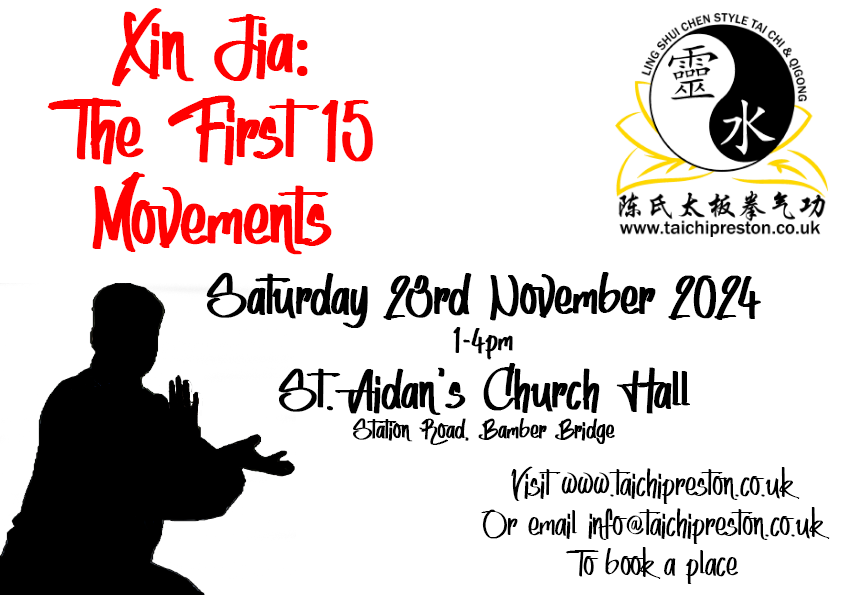
As Autumn draws in we thought it would be nice to squeeze one more seminar in before the end of the year so we've booked St. Aidan's Church Hall for the afternoon of Saturday November 23rd for a 3 hour refresher session looking at the first 15 movements of Xin Jia (or the 15 form as it's known to most club members). It will be a great opportunity to remind yourself of the sequence, improve your knowledge of the finer points of the form and practice moving from the centre. Head over to our seminar page to reserve yourself a place on the seminar.
Click above to book your place on the seminar
Xin Jia Yilu, often referred to as the 83 Form or the "New Frame, First Routine," is a relatively modern development within Chen-style Tai Chi. The "New Frame" (Xin Jia) was created by Chen Fake (1887–1957), a 17th-generation master of the Chen family, who revolutionized the traditional Chen-style Tai Chi by refining and evolving the original forms. Xin Jia Yilu is the first routine of this New Frame and is seen as an adaptation and extension of the "Old Frame" (Lao Jia) created by earlier generations of the Chen family.
Origins of Xin Jia
The development of Xin Jia Yilu began during Chen Fake’s lifetime, particularly when he moved to Beijing in the early 20th century. Chen Fake was already highly respected for his mastery of Lao Jia, but his approach to the art evolved significantly during this period. As a response to the demands of the modern world and perhaps as a result of his deepening understanding of internal energy cultivation (neigong), Chen Fake began to introduce new elements to the traditional Chen-style form.
While Lao Jia is rooted in the teachings of Chen Wangting, the 9th-generation patriarch of Chen-style Tai Chi, who synthesized martial techniques with the Daoist principles of yin-yang and qi circulation, Chen Fake saw an opportunity to refine the movements. He introduced subtle but profound modifications to express greater complexity and sophistication. His changes led to the creation of two New Frame routines—Xin Jia Yilu (First Routine) and Xin Jia Er Lu (Second Routine)—with Yilu focusing on foundational techniques and Er Lu emphasizing explosive power (fajin).
At Ling Shui we practice our Tai Chi in the style of Master Wang Haijun. Here he is performing the first 15 movements of Xin Jia:
Differences Between Xin Jia and Lao Jia
While both Xin Jia and Lao Jia maintain the core principles of Chen-style Tai Chi, including circularity, spiralling energy (chan si jin), and the integration of softness and hardness, there are notable differences between the two. These differences reflect not only Chen Fake's innovations but also his deepening mastery of the art.
Spiralling Energy (Chan Si Jin): Both frames emphasize the concept of chan si jin, or "silk-reeling energy," which involves a continuous spiralling motion in the limbs and torso to generate power. However, Xin Jia places a greater emphasis on this principle, with more pronounced spiralling and twisting movements, allowing for finer control of internal energy.
Size and Complexity of Movements: Lao Jia tends to feature larger, more expansive movements that are relatively simple and fluid. In contrast, Xin Jia introduces more compact, intricate, and detailed movements. The smaller circles and increased complexity in Xin Jia challenge practitioners to control their internal energy (qi) more precisely and promote deeper coordination between the upper and lower body.
Fajin (Explosive Power): While both forms contain elements of fajin, the explosive release of energy, Xin Jia incorporates this principle more frequently and dramatically. In Lao Jia, fajin tends to be reserved for specific points in the form, whereas Xin Jia integrates fajin more seamlessly throughout, reflecting the increased intensity and internal power cultivated in this form.
Transitions and Flow: The transitions between movements in Xin Jia are more intricate and connected by internal energy flows, requiring practitioners to pay closer attention to the subtle connections between movements. Lao Jia emphasizes a smoother, more continuous flow, while Xin Jia often includes dynamic contrasts between soft and hard movements, reflecting a more complex understanding of yin-yang principles.
Internal Cultivation: Xin Jia focuses heavily on internal energy cultivation, emphasizing the role of the dantian (energy centre) in guiding movements. Practitioners of Xin Jia must maintain a heightened awareness of internal processes such as the movement of qi through the meridians, which in turn helps to inform the outward physical movements.
The Nature of Xin Jia Yilu
Xin Jia Yilu is a practice that demands a high level of internal awareness and energy management. While it's rooted in the same martial principles as Lao Jia, the New Frame goes beyond basic martial techniques and becomes a study of the internal workings of the body. Practitioners are encouraged to connect deeply with their internal energy, and movements must be executed with a level of precision that reflects this heightened awareness.
In the first routine, Xin Jia Yilu, practitioners focus on the fundamental movements that define Chen-style Tai Chi, but they are performed with a greater focus on internal dynamics and spiralling energy. This routine is an essential foundation for understanding the more advanced practices within Xin Jia, such as Er Lu, which focuses on fajin and combat applications. However, Yilu itself is considered both a comprehensive martial training and a meditative, health-promoting practice.
So there you have it! Xin Jia Yilu represents the continued evolution of Chen-style Tai Chi, a balance between tradition and innovation. While it maintains the core principles of the Chen family’s martial art, it also introduces new complexities and internal energy work that challenge practitioners at both a physical and mental level. This form showcases the richness of Chen Tai Chi, embodying centuries of wisdom while adapting to the modern practitioner's need for a deeper understanding of internal martial arts.




 In September 2015 Ling Shui opened the doors on our Saturday morning Bamber Bridge class for the very first time. Since that humble beginning, we've moved location three times, weathered a global pandemic and openend up another five weekly classes in various locations.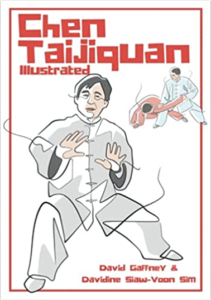
 While it's the quality of your practice that really matters, it doesn't hurt to look good while you're at it. To that end, we thought we'd milk the 10th anniversary concept for all it was worth and have put together some rather glamorous t-shirts and hoodies to set you apart from the hoi polloi. You'll find details and an order form here in our