The History of the Ba Duan Jin: CHQA Youtube Playlist

We're back in the swing of IRL sessions again now and will be gathering in St. Leonard's Church Hall at 7pm this evening to practice our Chen style Tai Chi and sip green tea (yes, the teapot is most definitely back!). Can't make tonight? We'll be in Valley Church, Bamber Bridge from 10am Saturday morning and in Our Lady's Church Hall in Tarleton next Tuesday afternoon from 2:30pm. Beginners are always welcome 🙂 In addition to the Chen Style Tai Chi which is the main focus of our practice, we also learn a variety of Qigong exercises. One of the most ancient Qigong routines is the Ba Duan Jin ( or 8 Pieces of Brocade). The Chinese Health Qigong Association have a video playlist that details the origins of the sequence and runs through each of the exercises. Whether you know the routine already, or would like to learn it, check out their playlist here:
Chinese Health Qigong Association
 

Harper's Bazaar: 7 tai chi benefits, from the mental to the physical

Those of us who practice Tai Chi regularly know how great it can make you feel both physically and mentally, but to the uninitiated it may seem unlikely that such a slow, graceful and gentle practice could possibly do so much good.

This article from Harper's Bazaar outlines 7 tangible benefits anyone can get from Tai Chi if they put in the effort...

Buckling the Swash!

It's usual for class numbers to fluctuate a little over the summer months as people take advantage of the fine weather. Last Thursday evening's class was a little quiet so we thought we'd have a bit of fun and broke out the Dao's for a bit of sword play!
 
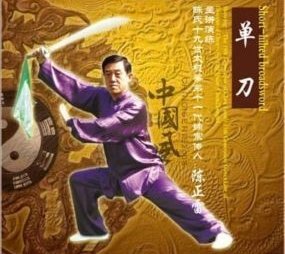
The Dao is a single edged sword often referred to as the Chinese Sabre or Broadsword. They were predominantly used for slashing and chopping and were the military sword of choice from around the 13th century.
 
Apart from being great fun, sword play can also help to refine our Tai Chi practice and condition our arms, wrists and hands (the Dao is not the lightest of the Chinese weapons!).
All being well, we'll be running a Dao Seminar a little later in the year which will give students to learn the short form we practice at the club. Once proficient, the form can be performed in under a minute as Grand Master Chen Zhenglei ably demonstrates in this brief video...
 

The Fascial Layer and Tai Chi

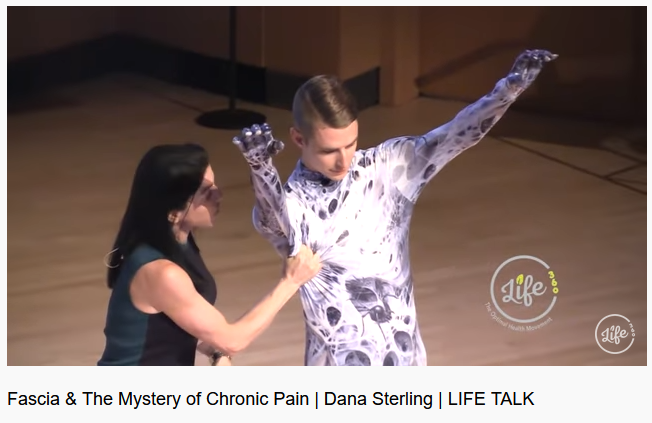
At Ling Shui we talk a great deal about the importance of the body's fascial layer in practising Tai Chi. It provides a useful bridge to understanding the apparent contradictions the two very different Western and Traditional Chinese medical paradigms.

From a Tai Chi perspective, we train ourselves to feel the physical connections within our body and use spiralling, coiling motions to move using those connections.

From a Traditional Chinese Medicine perspective, anyone who has used acupuncture to treat muscular pain will more than likely have been astounded at the relief that just a few small needles dotted around the body can have. The idea that the acupuncture channels are part of the fascia provides a possible explanation for the underlying physical processes that are at work.

The following video gives a wonderfully clear explanation of how the fascia plays a role in both movement and pain:


The Historical Kung Fu Society

It's usual for a Chinese Chen Tai Chi studio to have a small altar area dedicated to the ancestors such as Chen Fa-ke and Chen Zhaokui and Chen Xin.

Because we train at various rented locations, we don't have an area dedicated to the ancestors, but if we did there would be a photo of Phil Robinson who founded the Daolin Tai Chi club from which Ling Shui sprang when Phil retired.

After a few years of silence, Phil has relaunched the old Daolin Facebook Page and website as The Daolin Historical Kung Fu Society with the intention of exploring and explaining the origins and development of Chinese martial arts. It promises to debunk the superhuman claims and hyperbole that surround the Chinese arts and replace them with a more accurate historical perspective.


Check out the website here:


Tai Chi: Promising for COPD

Tai Chi and Qigong both have many health benefits attributed to them. While some of these claims stretch the limits of credulity, those of us who practice the arts are familiar with the benefits that come with regular practice.

Anecdotal evidence is not data though, so it's always good to back up what we practitioners know with a bit of good old fashioned scientific research.

The following article from the Harvard Medical School touches upon the benefits of Tai Chi practice for sufferers of COPD.

If you know someone who suffers from this unpleasant disease you might want to introduce them to this article and tell them about us (while reassuring them that UK classes are markedly cheaper than their US counterparts!)


Tai chi: Promising for COPD


Qigong, used to complement COVID-19 and cancer treatment, a mental 'game-changer'

Traditional  Chinese Medicine (TCM) is built around an entirely different paradigm to that of Western medicine. As a result, TCM can seem a little crazy when first encountered by Westerners who have only been exposed to the clinical approach to medicine . The void left by the lack of understanding is frequently filled with vague and confused language, often centred on the idea of energy. In fact, there's no need for mystical explanations. By understanding that the two medical traditions simply approach the human condition from different directions and that neither tradition is definitive,  it's possible to find truth and value in both.

In recent years, Western science has increasingly investigated the claims of TCM with regard to treatments such as acupuncture and pursuits such as meditation, Tai Chi, Qigong and Yoga (which of course originates in India but is analogous to Tai Chi in many ways. That's the subject for a post all of it's own though!). The resulting studies are slowly building a picture of the real and tangible benefits to be gained from the Chinese model. The discovery of the Interstitium and investigation into facial layers within the body provide Western models with a medium through which the effects of treatments like acupuncture can be transmitted throughout the body.

Of course, those of us who practice Tai Chi and Qigong already know how beneficial it can be in helping to maintain physical and mental wellbeing, but it's always nice to have a little bit of Western science confirming what your body's telling you!

As Covid-19 continues to spread around the world, the following article discusses the benefits offered by Qigong and Tai Chi for people recovering from not only Covid, but other equally awful illnesses such as cancer...


ABC News Australia


Intangible Cultural Heritage

Happy New Year everyone!

Online sessions resume from tomorrow (Saturday 9th) with Qigong for Health at 11am, while Tuesday and Thursday will see the return of our regular Tai Chi sessions.

In other news, at the end of last year the United Nations Educational, Scientific and Cultural Organization (UNESCO) listed Tai Chi as an Intangible Cultural Heritage of Humanity.

If you'd like to find out more about Tai Chi, or to get involved in our online classes, drop us a line at info@taichipreston.co.uk for details.


Physiology and Qi

When discussing our Tai Chi practice, there can be a tendency to rely on words such as Qi, Shen, Meridians and Dantian. Whilst these concepts are all important parts of Tai Chi, they can take time to understand and are open to widespread misinterpretation.

During our practice, we periodically practice the Zhan Zhuang standing meditation. This is a fundamental exercise in the practice of Tai Chi because it helps to cultivate Qi and Shen. But what does that actually mean?

Whatever else may or may not be happening when we practice Tai Chi, from a Western scientific point of view there are some very real, quantifiable physiological effects.

Click below to read a brief article published on the Yield Turn Push Tai Chi Blog which discusses what happens in the body during Zhan Zhuang practice and relates it to the concept of Qi...


Yield Turn Push Tai Chi Blog

Popular Science: Scientists found a ‘new organ,’ but it might not be what you’re expecting

I've shared an article very similar to today's link previously, but when I came across this particular article this morning I thought it was worth sharing again.

Traditional Chinese Medicine and acupuncture contain the idea of meridians running through the body transmitting Qi and promoting health. Illness and disease are thought of as Qi blockages in the meridians which both TCM and acupuncture seek to clear in order to restore balance and, consequently, health.

The article linked below talks about the idea that scientists have discovered what they believe to be a new organ in the human body named the Interstitium.

It's a cellular layer which surrounds all of our internal organs and envelops the entire body.

Whether it's ultimately classified as an organ or not isn't really important from a Tai Chi/Qigong point of view. For those of us who at times struggle to reconcile the western scientific paradigm with that of TCM, the Interstitium provides a potential explanation for how treating one area of the body can have an appreciable effect on a completely different part of the body.

By enveloping the entire contents of our body in a single layer, the Interstitium provides a medium for the meridians to traverse, with acu-points targeting areas that are able to interact with other remote parts of the body via the Interstitium. Click the link below and read on for a fuller explanation of the science...


Popular Science: Scientists found a ‘new organ,’ but it might not be what you’re expecting