We try to organise a few seminars during the course of the year. The seminars offer students the opportunity to study with talented instructors from the UK Chen Tai Chi community and cover a range of topics including Tai Chi forms, weapons and Qigong exercise forms and are always popular.
Saturday 21st January saw us gather for an afternoon studying the Daoyin Yangsheng Gong Shi Er Fa 12 Exercises with Feixia Yu, Director of the UCLAN Confucius Institute and accomplished BHQA Qigong Instructor. As always, the session was at times challenging but hugely informative and satisfying for everyone who attended.
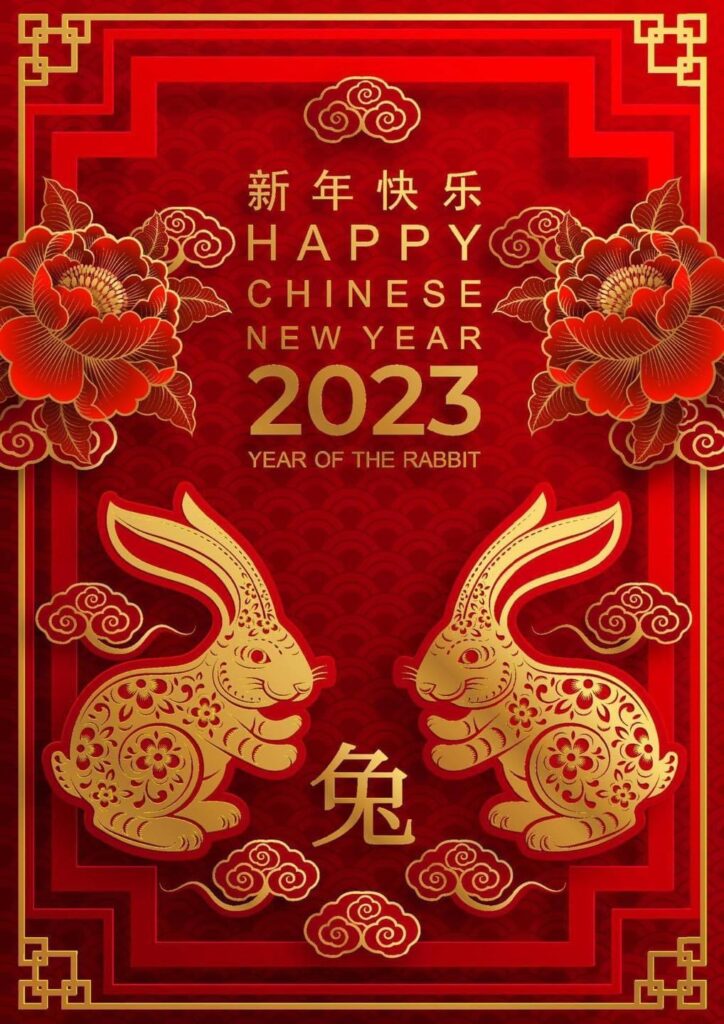
The seminar was intended to mark the arrival of the Year of the Rabbit and, in keeping with club tradition, was followed by a few drinks and a magnificent banquet at Preston's finest Chinese restaurant, Tang KTV
You'll find photos from the seminar (although not the meal - we were too busy stuffing our faces to think about taking photos!) on our seminar page.
Gōngxǐ Fācái 恭喜发财
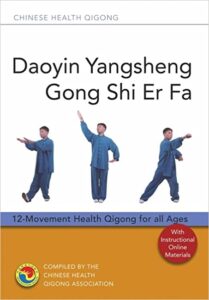
If you were at the seminar or are just interested in learning the Daoyin 12 Exercises, the Chinese Health Qigong Association have a great little book that comes with a link to download comprehensive training videos. Click the image below to find the book on Amazon:
We like to celebrate Chinese New Year with a seminar in the afternoon and a Chinese banquet in the evening. This year we're delighted to welcome the wonderful Feixia Yu for an afternoon learning the Daoyin 12 Qigong for Health sequence.
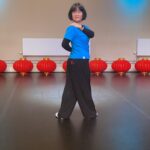
Professor Yang Yubing from Beijing Sport University demonstrates Daoyin 12
There are literally thousands of books about Tai Chi available, including a wide range of texts old and new focussing on the Chen family style (I should know, I own more than my fair share of them!).
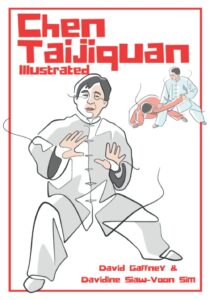
I recently bought "Chen Taijiquan Illustrated" by David Gaffney & Davidine Siaw-Voon Sim. Where other books can get bogged down in complicated textual descriptions and lost in the Chinese paradigm, Chen Taijiquan Illustrated" breaks the subject down into manageable chunks making it easy to understand and digest for beginners and more advanced practitioners alike.
Breaking the subject down into 3 sections, the book focuses on the physical rules governing posture and movement, applications of the techniques learnt through form practice and the philosophical concepts underpinning the art.
Each section is presented as a series of condensed bullet lists pulling together Western and Chinese terms and ideas complemented with helpful illustrations and quotations from Grand Masters past and present. It succeeds in that rarest of achievements and presents the complexities of Chen Style Tai Chi and in a way that is comprehensible and useful.
If you haven't already, you can grab yourself a copy on Amazon, or from the authors' website, here:
We have two sessions on a Thursday evening. The first is an open class for students of all levels where we focus on practising silk reeling exercises and the old frame short forms of Master Liming Yue and Grand Master Chen Zhenglei. In addition to the old frame short forms, we also practice the first 15 movements of the new frame form, Xin Jia. When first introduced to the 15 Form, students can struggle to see how some of the movements can be related directly to the movements they've learnt in the preceding old frame forms.
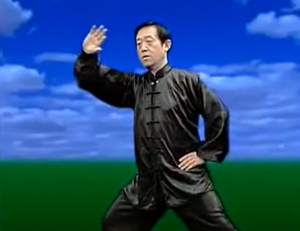
Our second session of the evening is aimed at more advanced practitioners where, amongst other things, we focus on the practice of the old frame form Lao Jia Yilu. This video features Master Chen Xiangwu practising Lao Jia Yilu, but he includes fajin (energy) releases and performs certain movements in a more new frame style. It's an interesting study because it provides an insight into how the old and new frames are just two sides of the same coin...
The Traditional Chinese Medicine (TCM) paradigm can be difficult to understand in relation to the Western Scientific/Medical model that most of us are familiar with. Many of the ancient Chinese texts can seem difficult to interpret without the appropriate cultural knowledge. Despite this there's no shortage of people sharing internet memes with quotes from texts such as the Dao De Jing. Whilst these writings do indeed offer some profound insights into the business of being a human being, those insights are often only really available to those with sufficient understanding of the contextual culture and metaphor surrounding them. To many people I suspect they evoke a sense of the profound, whilst actually communicating very little.
By way of contrast, the reality of TCM is that it's an ancient practice which is the result of millennia of observations of illnesses, diseases and the human condition in general, and the efficacy of certain natural treatments, exercises and remedies. Whilst the explanatory framework is somewhat figurative, it doesn't invalidate the observations or proposed treatments. Indeed, modern medicine is only now waking up to the links between mental health and gut health, or the importance of the facial layer in referred pain, both of which are accommodated within the TCM framework.
I find it helpful when western scientific research concurs with the Chinese model. As a Western student of Tai Chi and Qigong with an educational background in the sciences, such confirmations provide a greater insight into how two such different paradigms can both have merit and comfortably co-exist.
This report, pulling together research from around the world, demonstrates the very real benefits that regular practice of Tai Chi and Qigong can bestow upon the practitioner. It's a bit of a dry read for those who don't make a habit of reading science papers, so let me spoil the report for everyone by sharing its conclusions with you here:
"A compelling body of research emerges when Tai Chi studies and the growing body of Qigong studies are combined. The evidence suggests that a wide range of health benefits accrue in response to these meditative movement forms, some consistently so, and some with limitations in the findings thus far. This review has identified numerous outcomes with varying levels of evidence for the efficacy for Qigong and Tai Chi, including bone health, cardiopulmonary fitness and related biomarkers, physical function, falls prevention and balance, general quality of life and patient reported outcomes, immunity, and psychological factors such as anxiety, depression and self-efficacy. A substantial number RCTs have demonstrated consistent, positive results especially when the studies are designed with limited activity for controls. When both Tai Chi and Qigong are investigated together, as two approaches to a single category of practice, meditative movement, the magnitude of the body of research is quite impressive."
For those of you out there who do enjoy wading through the odd scientific journal, you'll find the full paper here:
A Comprehensive Review of Health Benefits of Qigong and Tai Chi
The moral of the tale? Keep doing what you're doing, as long as what you're doing is Tai Chi and Qigong!
If you aren't currently a Tai Chi or Qigong practitioner but feel compelled to find out more after reading this article, head to our Beginners page to get in touch and join us at a session.
Mawangdui, translated as 'King Ma's Mound', is an archaeological site located in Changsha, China. The site consists of two saddle shaped hills which contain three tombs. These tombs were initially thought to be those of Ma Yin, ruler of the Chu kingdom between 853 and 930AD, giving rise to the erroneous name Mawangdui.
It was subsequently established that the tombs actually dated back to the Western Han dynasty (206 BC – 9 AD) and were those of the Chancellor Li Cang, his wife Xin Zhui, and a male believed to have been their son. It's now thought that the original name may have been mis-interpreted and should in fact be the similarly sounding "Ma an dui" meaning "saddle-shaped mound" in reference to the geography of the hills containing the tombs.
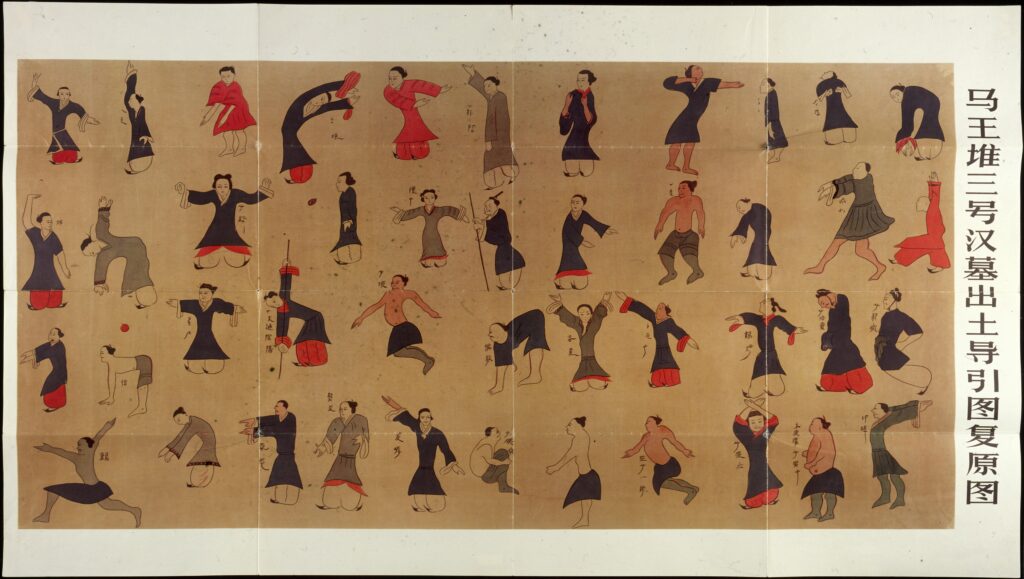
The tombs contained well preserved mummified remains and a wealth of other artefacts including a number of Chinese philosophical and medical works written on silk. Known as The Mawangdui Silk Texts, they include some of the earliest manuscripts of existing texts such as the I Ching and the Tao Te Ching. In addition to these and other works were numerous previously unknown medical texts. These medical texts included depictions of Daoyin (Qigong) exercises which are today known as the Mawangdui Daoyin Shu.
Ancient Illustration of the Mawangdui Daoyin Shu Movements
Consisting of 12 easy to learn, graceful movements, the Mawangdui Daoyin Shu movements work with the flow of Qi through the meridians and encourage connection between the external movements of the body and the internal activity of the mind. Through rising and squatting, extending and withdrawing the limbs, bending and stretching, the movements help maintain health and cultivate the spirit.
We're delighted to be able to announce that guest instructor Feixia Yu from the UCLAN Confucius Institute will be joining us at the start of October to share this ancient Qigong sequence with us.
You can find a demonstration of the sequence on YouTube, here.
The seminar will be held in St. Aidan's Church Hall on Station Road in Bamber Bridge on Saturday 1st October between 1 - 4pm and is suitable for adults of all ages and abilities with no previous experience required. For more information, or to reserve a place, please visit our seminars page, here.
Well the weather is glorious (if somewhat apocalyptic), so why not join us at 7pm this evening for the Tai Chi equivalent of a steam bath in St. Leonard's church hall, Penwortham. There'll be a little silk reeling, a little form work, Green Tea and a fair degree of perspiration!
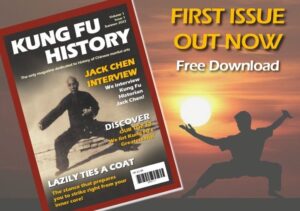
For those not training, you may like to use the time for a little historical reading around the Chinese arts. If you haven't already, check out/download the first edition of the The Historical Kung Fu Society magazine here:
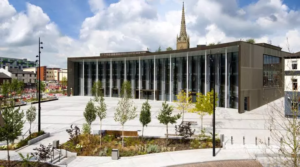
Feixia Yu, Director of the UCLAN Confucius Institute and fantastic Qigong instructor, will be hosting a free Daoyin Spine Alignment Qigong session in the New University Square (which used to be the Adelphi Roundabout) next Wednesday 1st June 12:30-1:00pm. Details Below
Tai Chi in the Square
Everyone is welcome to come and try the art of Tai Chi and Qigong in this short session for UCLAN staff, students and the wider community of Preston.
Please note: There is no booking required, simply turn up! The session will be held outdoors so please dress comfortably and appropriately for the session.
Modern sedentary lifestyles coupled with long hours of screen time have resulted in common complaints of headache, sore neck, tensed shoulders, or lower back pain, which are often caused by poor alignment in the spine. This can be corrected with regular practice of many of the Tai Chi and Qigong routines which consist of gentle but effective stretches.
Join this FREE class delivered by Senior Instructor Feixia Yu. The gentle movements coupled with deep breathing also calm the mind and release both physical and mental stress.
Location: University Square, Preston
Posted on
Commencing on Wednesday 25th May we will be offering fortnightly Qigong sessions at The Kurloon Source Wellbeing Retreat in Pilling. There will be two consecutive 50 minute sessions of Qigong for Health which will involve a variety of exercises including the ancient Ba Duan Jin sequence and a selection of movements from the Yang Shi Ba Shi sequence. In addition to the exercises will include both standing and guided meditation.
To book a place at one of the sessions, please contact Sue at Kurloon via her Facebook page. The logo below links to the event for the first session.
Just a reminder that there will be NO CLASS in Tarleton this Tuesday afternoon (17th May). We'll be open again as usual next week.
In the absence of our Tuesday session, you might like to practice a little silk reeling. On our YouTube channel you'll find a link to a great instructional video from Grandmaster Chen Zhenglei demonstrating a variety of silk reeling exercises that we practice in class...





 We're delighted to be able to announce that guest instructor Feixia Yu from the