The Ancient Art of Liu Zi Jue: Harnessing the Power of the Five Healing Sounds

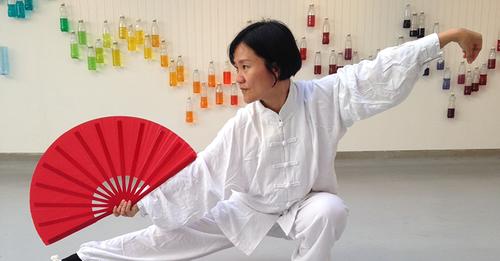
The Liu Zi Jue, also known as the Six Healing Sounds, holds a special place in Traditional Chinese Medicine (TCM) offering a unique approach to health and well-being. We're delighted to announce that Feixia Yu from the UCLan Confucius Institute will be joining us this October for an afternoon learning and practicing this ancient health Qigong exercise.

Click to reserve a place at our Autumn Liu Zi Jue seminar

Liu Zi Jue, which translates to “Six Word Formula,” dates back over a thousand years. The earliest written records can be traced to the Southern and Northern Dynasties (420-589 AD), making it one of the oldest known Qigong practices. The exercises were further refined and popularised during the Tang (618-907 AD) and Song (960-1279 AD) Dynasties. Over the centuries, respected TCM practitioners and scholars documented its techniques and benefits and today it's deeply embedded into the fabric of Chinese health practices.

The essence of Liu Zi Jue lies in its simplicity and profound effectiveness. Each of the six sounds corresponds to a different organ and meridian in the body. The sounds, when pronounced correctly, are believed to vibrate specific organs, expelling stagnant Qi (vital energy) and replenishing it with fresh, vital energy. This practice aligns with the TCM philosophy of maintaining balance and harmony within the body to ensure health and vitality.

The video below features Master Faye Yip from the British Health Qigong Association demonstrating the form:

The Six Healing Sounds Explained

The Liu Zi Jue sequence involves six distinct sounds, each associated with a particular organ and its corresponding element:

  1. Xu (Shu) – Liver (Wood)
  2. He (Her) – Heart (Fire)
  3. Hu (Hoo) – Spleen (Earth)
  4. Si (Sss) – Lungs (Metal)
  5. Chui (Chway) – Kidneys (Water)
  6. Xi (Shee) – San Jiao (Triple Burner/Heater)

Practitioners of Liu Zi Jue perform these sounds while engaging in gentle, flowing movements. This combination of vocalisation and motion is designed to stimulate the internal organs, promoting the smooth flow of Qi and aiding in the detoxification and revitalisation processes.

Health Benefits According to Traditional Chinese Medicine

The benefits of Liu Zi Jue are extensive and multifaceted, reflecting the holistic nature of TCM. Here are some key advantages:

  1. Enhancing Qi Circulation: By clearing blockages and ensuring the free flow of Qi, Liu Zi Jue helps maintain overall energy balance. This is crucial for preventing illness and sustaining vitality.
  2. Detoxifying the Organs: The vibrations produced by the specific sounds help in detoxifying the organs, expelling toxins, and rejuvenating organ function.
  3. Boosting Immunity: Regular practice strengthens the immune system, making the body more resilient against infections and diseases.
  4. Reducing Stress and Anxiety: The meditative aspect of the practice, combined with controlled breathing and sound production, has a calming effect on the mind, reducing stress and anxiety levels.
  5. Improving Respiratory Health: Particularly the “Si” sound for the lungs, helps in clearing respiratory pathways, making it beneficial for individuals with respiratory issues.
  6. Supporting Digestive Health: The “Hu” sound targets the spleen and stomach, aiding in digestion and improving metabolic processes.

Embracing Liu Zi Jue Today

In today’s frenetic world, the gentle practice of Liu Zi Jue offers a sanctuary of calm and healing. Whether you’re seeking to enhance your physical health, manage stress, or simply explore an ancient tradition, incorporating the Six Healing Sounds into your daily routine can be immensely rewarding.

The beauty of Liu Zi Jue lies in its accessibility. You don’t need any special equipment or a specific location, just a quiet space where you can focus on your breath, sounds, and movements.

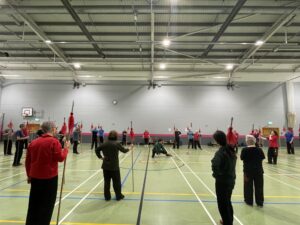
With that in mind, we're delighted to announce that accomplished Qigong practitioner and instructor Feixia Yu will be joining us this Autumn for an afternoon learning and practising Liu Zi Jue and Qigong meditation. The seminar will be taking place in St. Aidan's Church Hall, Bamber Bridge from 1 - 4pm on Saturday 5th October and is sure to be popular, so head over to our Seminar booking page to reserve your place now.

Free Qigong Classes Are Back!

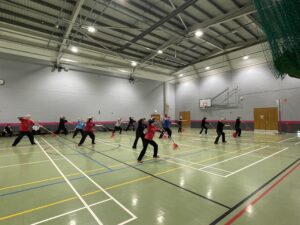
Our popular Thursday early evening Qigong for Health classes have returned to  Tarleton Library, with funding secured to provide sessions for the foreseeable future.

The classes are open to the public and free of charge but places are limited, so you'll need to pop into the library to book a place if you'd like to take part. For directions to the library, click here.

The sessions are suitable for both beginners and experienced practitioners alike, with a focus on a variety of easy to learn traditional Qigong exercises aimed at promoting physical and mental wellbeing.

One of the exercise sequences you'll encounter at the session is the Ba Duan Jin, also known as the “Eight Pieces of Brocade”. It's a traditional form of Qigong that's been practised in China for nearly a thousand years.

Its origins can be traced back to the Song Dynasty (960–1279AD). According to legend, General Yue Fei developed these exercises to improve the health and fitness of his soldiers, although historical evidence supporting this claim is limited. Regardless of its exact origins, the Ba Duan Jin has been valued in China for its simplicity and effectiveness for centuries.

The Ba Duan Jin consists of eight distinct movements, each targeting different aspects of physical and mental well-being. The term “Eight Pieces of Brocade” suggests something precious and beneficial, reflecting the value these exercises provide.

The Eight Exercises of the Ba Duan Jin


Regular practice of the the Ba Duan Jin bestows a number of health benefits, including:

Improved Flexibility and Strength: Each movement gently stretches and strengthens various muscle groups, enhancing overall flexibility and muscle tone.

Better Balance and Coordination: The slow, deliberate movements of the Ba Duan Jin improve balance and coordination, which can be particularly beneficial for older adults.

Enhanced Circulation and Cardiovascular Health: The rhythmic nature of the exercises promotes blood flow and supports a healthy cardiovascular system.

Stress Reduction: The Ba Duan Jin incorporates deep breathing and mindful movement, which help to calm the mind and reduce stress levels.

Increased Energy Levels: Practitioners often report feeling more energised and alert after practising the Ba Duan Jin, due to improved circulation and balanced Qi (vital energy).

Improved Digestion: Certain movements are believed to stimulate the digestive system, promoting better digestive health.

Joint Health: The gentle, flowing motions are easy on the joints, making the Ba Duan Jin suitable for individuals with arthritis or other joint issues.

Mental Clarity and Focus: The meditative aspect of the Ba Duan Jin helps to clear the mind, enhancing concentration and mental clarity.

The relatively gentle and straightforward exercises of the Ba Duan Jin make it accessible to people of all ages and fitness levels. It provides an holistic approach to health, benefiting the body, mind, and spirit.

Here's a video of Master Faye Yip from the Chinese Health Qigong Association UK demonstrating the exercises:

If your interest is piqued, why not join us at Tarleton Library every Thursday at 4pm, or in St. Aidan's Church Hall in Bamber Bridge at 11am on a Saturday morning? You'll find full details of all our sessions on our website, here.

Pear Blossom Spear

Before Easter I had the privilege of attending Master Wang Haijun's Easter Camp, where we spent 5 days learning the 71 movement Pear Blossom Spear form.  It was both mentally and physically demanding, but thoroughly enjoyable and hopefully the first of many Easter Camps I'll have the opportunity to attend over coming years.

It will take many hours of practice before I have even a rudimentary grasp of the entire form, so it won't be something we'll be learning in classes, but I thought some members might be interested to know a little more about the Chinese spear's history and use.

The history of the Chinese spear, known as "Qiang" in Chinese, is a fascinating journey spanning thousands of years, deeply intertwined with the development of Chinese martial arts and military tactics.

The Chinese spear's origins can be traced back to ancient China, where it was initially used as a hunting tool before later being adapted for military purposes. Early spears were likely made from wood or bone, featuring a simple pointed tip for thrusting.

As warfare evolved in ancient China, the spear became a staple weapon for foot soldiers due to its versatility and effectiveness in close combat. During the Warring States period (475–221 BCE) and subsequent dynastic eras, various forms of spears emerged, ranging from short thrusting spears to longer weapons designed for cavalry.

The techniques and principles of spear combat were gradually incorporated into Chinese martial arts systems, such as Shaolin Kung Fu, Tai Chi Chuan and various regional styles. Martial artists refined spear techniques, developing specialized forms and drills to enhance combat proficiency.

General Guan Yu

The Chinese spear gained further prominence through chivalric literature and legends, where skilled spear-wielding heroes and warriors were celebrated for their prowess in battle. Stories of legendary figures like Guan Yu, a general during the Three Kingdoms period, further elevated the status of the spear in Chinese culture.

In the realm of Tai Chi, the spear holds a special place, particularly in Chen style. The Chen family, credited with the creation of Tai Chi, developed intricate spear forms that integrated fluid Tai Chi movements with the dynamic techniques of spear combat. These forms, such as the Chen 71 Movement Pear Blossom Spear form, exemplify the fusion of martial skill and internal energy cultivation.

In the 20th century, with the advent of modern warfare and the rise of communism in China, traditional martial arts faced challenges. However, spear techniques persisted, and in the context of Wushu (modern Chinese martial arts), spear routines became standardized for performance and competition. Wushu spear routines showcase acrobatic movements, agility, and precision, reflecting the evolution of traditional techniques into a contemporary sport.

Today, the Chinese spear continues to captivate martial arts enthusiasts worldwide, with practitioners exploring its historical significance, practical applications, and artistic expressions. Its influence extends beyond martial arts, inspiring filmmakers, writers, and artists to depict the elegance and power of this ancient weapon.

In conclusion, the history of the Chinese spear is a testament to its enduring legacy as a symbol of martial prowess, cultural heritage, and artistic expression. From its humble beginnings as a hunting tool to its evolution into a revered martial arts weapon, the Chinese spear embodies the rich tapestry of Chinese history and tradition.

Here's a video of a young Grandmaster Chen Zhenglei demonstrating the 71 movement form at a blistering pace:

Chinese Sabre (Dao) June Seminar

Chinese Sabre or Dao (刀)

The origins of the Chinese sabre, known as the dao (刀), can be traced back to the Shang dynasty (c. 1600–1046 BCE), where warriors used bronze versions of the dao. However, it was during the Han dynasty (206 BCE – 220 CE) that the dao truly began to take shape as a distinct weapon. Initially, it was a straight-bladed weapon, but over time, its design evolved to include a curved blade, which enhanced its slashing capabilities.

Over the course of Chinese history, the dao became an integral part of warfare, with various dynasties refining its design and techniques. It was during the Ming dynasty (1368–1644 CE) that the dao reached its zenith in terms of design and martial application. Masters of martial arts schools developed intricate forms and techniques specifically tailored for the dao, emphasizing its versatility and lethality on the battlefield.

Grandmaster Chen Zhenglei practicing Sabre

The design of the Chinese sabre is characterized by its single-edged, curved blade, which facilitates powerful slashing and chopping movements. The curvature of the blade allows for fluid cutting motions, making it a formidable weapon in close combat. Traditionally, the blade was forged from high-carbon steel and tempered to achieve optimal strength and flexibility. The hilt of the dao typically features a guard to protect the wielder's hand and a pommel for balance.

Master Wang Haijun teaching the Sabre form

Chen Style Tai Chi incorporates the use of the dao. Practitioners learn to wield the dao with precision and fluidity, incorporating Tai Chi principles such as relaxation, balance, and internal energy (qi) cultivation. Movements with the dao are executed with grace and efficiency, combining circular motions with bursts of power.

We'll be hosting a seminar looking at the Chen Sabre form over the afternoons of 7th & 8th June where you'll practice holding and using the sword before learning the form itself. Because of the space required to practice the form places will be limited and swords will be provided for those who don't have their own, so head over to our seminar booking page now to reserve your place.

Qigong Retreat with Feixia Yu

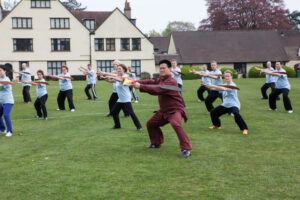
Last month we were joined in our Chinese New Year celebrations by UCLan Confucius Institute's director, Feixia Yu, for an afternoon studying and practicing the Ba Duan Jin. This wasn't the first time that Feixia has been gracious enough to act as a guest instructor for us and all of the many people who've attended her seminars over the last few years will know just what an outstanding teacher she is.

This May, Feixia will be hosting a week long Qigong retreat in Le Puget, France. She'll be joined on the retreat by Professor Vivienne Lo  and Dr. Dolly Yang, both of whom are experts in Chinese culture and medicine.

The retreat will offer a chance to explore the finer details of the movements, acupuncture points and energy flows, along the associated meridians, in the four classical qigong routines: Baduanjin, Yijinjing, Five-Animal Frolics and Six Healing Sounds.

Click the image below for further details and to book a place at the retreat.

Click for more details, or to book yourself a place

Putting Warrington to the Sword!

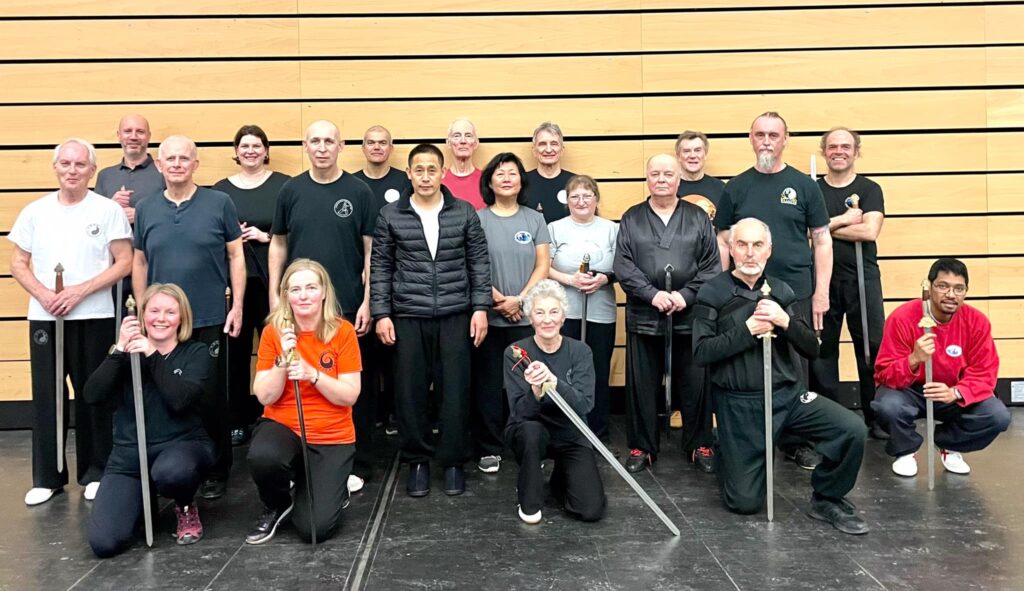
Master Chen Ziqiang visited the North West as a guest of Chen Taijiquan GB last week to host a number of seminars and we were fortunate enough to join him to study the 49 movement straight sword form.

The Chinese straight sword or Jian, is a beautiful and ancient weapon closely associated with Tai Chi and with Daoism in general. The Jian is a flexible blade that isn't able to meet force with force, instead the blade is used to deflect and redirect blows before delivering a slash or stab of its own.

The blade itself is usually considered as consisting of three parts, each used for different offensive and defensive techniques. The tip of the blade is the jiànfeng, meant for stabbing, slashing, and quick percussive cuts. The middle section is the zhongren or middle edge, and is used for a variety of offensive and defensive actions such as cleaving cuts, draw cuts, and deflections. The section of blade closest to the guard is called the jiàngen or root, and is mainly used for defensive actions such as deflecting an opponents strike.

The 49 Movement form stretches and strengthens the body's joints through a series of open and expansive postures. Flexibility in wrists and hands, lightness of footwork and agility in the waist are all hallmarks of the sword form which, when performed correctly, is said to resemble a dragon swimming through water.

The nature of the weapon lends itself naturally to the principles of Tai Chi. Often called the "Scholars Sword", it's difficult to master and swordplay is characterized by balanced body positions and a mixture of both defensive and offensive techniques. The fluid body movements, powerful thrusts and rapid swings, are synchronized into a beautifully flowing rhythm. The form itself is a developmental exercise teaching the relaxation and extension of energy. Sword practice aids general Tai Chi practice by improving balance, building strength and focusing the mind.

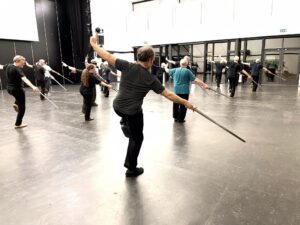
Over three evenings, Master Chen walked the group through every movement comprising the first half of the form, allowing practitioners of all levels an opportunity to improve their form.

There are video link below is to a publically viewable video on Master Chen Ziqiang's Facebook page which features him stepping through the form one movement at a time during a seminar.


Master Chen Ziqiang 49 Movements Straight Sword Form Seminar Practice


This second video features Grand Master Chen Zhenglei performing the form. It differs slightly from Chen Ziqiang's version, but is essentially the same and is how we aspire to perform it at Ling Shui.

Talking Chen Newsletter

The "Talking Chen Newsletter" is a great resource for anyone who has a serious interest in progressing their Tai Chi. Published by David Gaffney, lead instructor at Chentaijiquan GB (CTGB), it mixes discussions about technique and practice along side interviews with accomplished masters from Chen Jiagou and across the globe. You can sign up here to receive the newsletters as they're released, directly to your inbox.

The latest edition discusses the sad passing of Master Wang Xian, the importance of fang song (looseness of the mind and body) and shares six essential qualities and expressions of Tai Chi practice. Read it here.

David's Blogspot is also well worth a read and it lives here!

Click to visit Talking Chen with David Gaffney

Gōngxǐ Fācái 恭喜发财

A little late, but...

Gōngxǐ Fācái  -  恭喜发财 - Happy New Year!

Each year we like to mark the advent of the lunar New Year with a day of Tai Chi related events. This year was no different and started at 10am on New Year's Day with a 2 ½ hour Tai Chi session involving silk reeling exercises, a little Zhan Zhuang meditative standing and practice and correction of Lao Jia Yilu section 1.
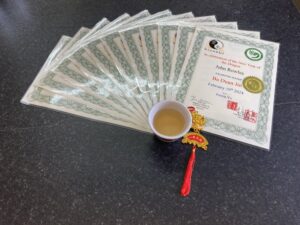
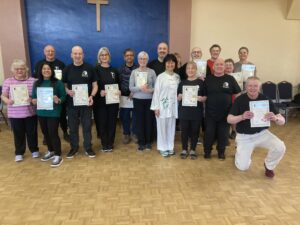
The afternoon saw guest instructor Feixia Yu from UCLan's Confucius Institute lead us in a detailed look at the ancient Ba Duan Jin Qigong exercises in between cups of green tea and New Year sweet treats.

After a short break to freshen up, those of us with time and energy left gathered for a couple of drinks before heading to Tang TV Chinese Restaurant in Preston for a fantastic banquet.
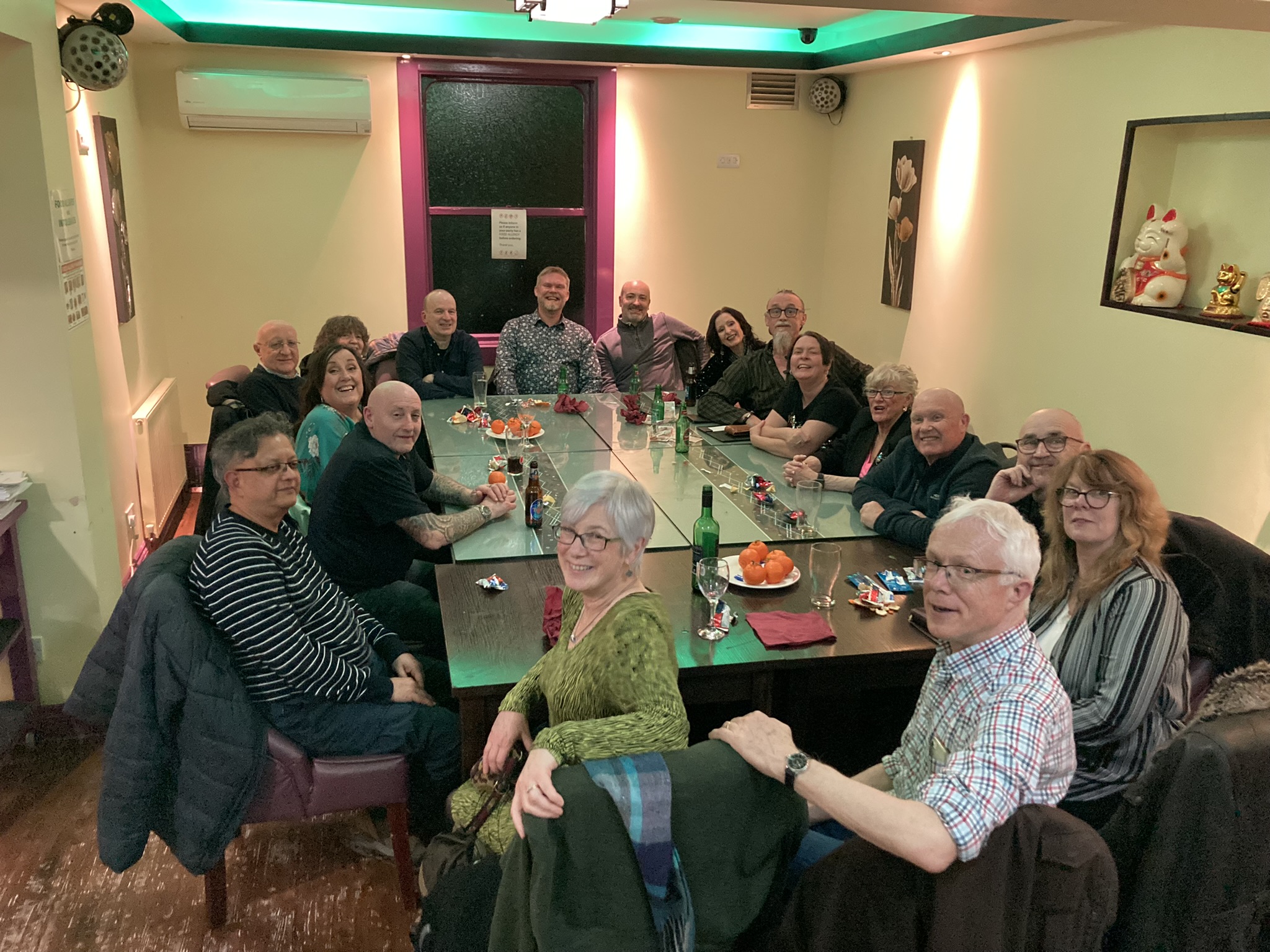
I think it's safe to say that a great day was had by everyone who attended any or all of the events. You'll find photographic proof in our Seminars photo gallery, here.

Chen Ziqiang UK Seminars

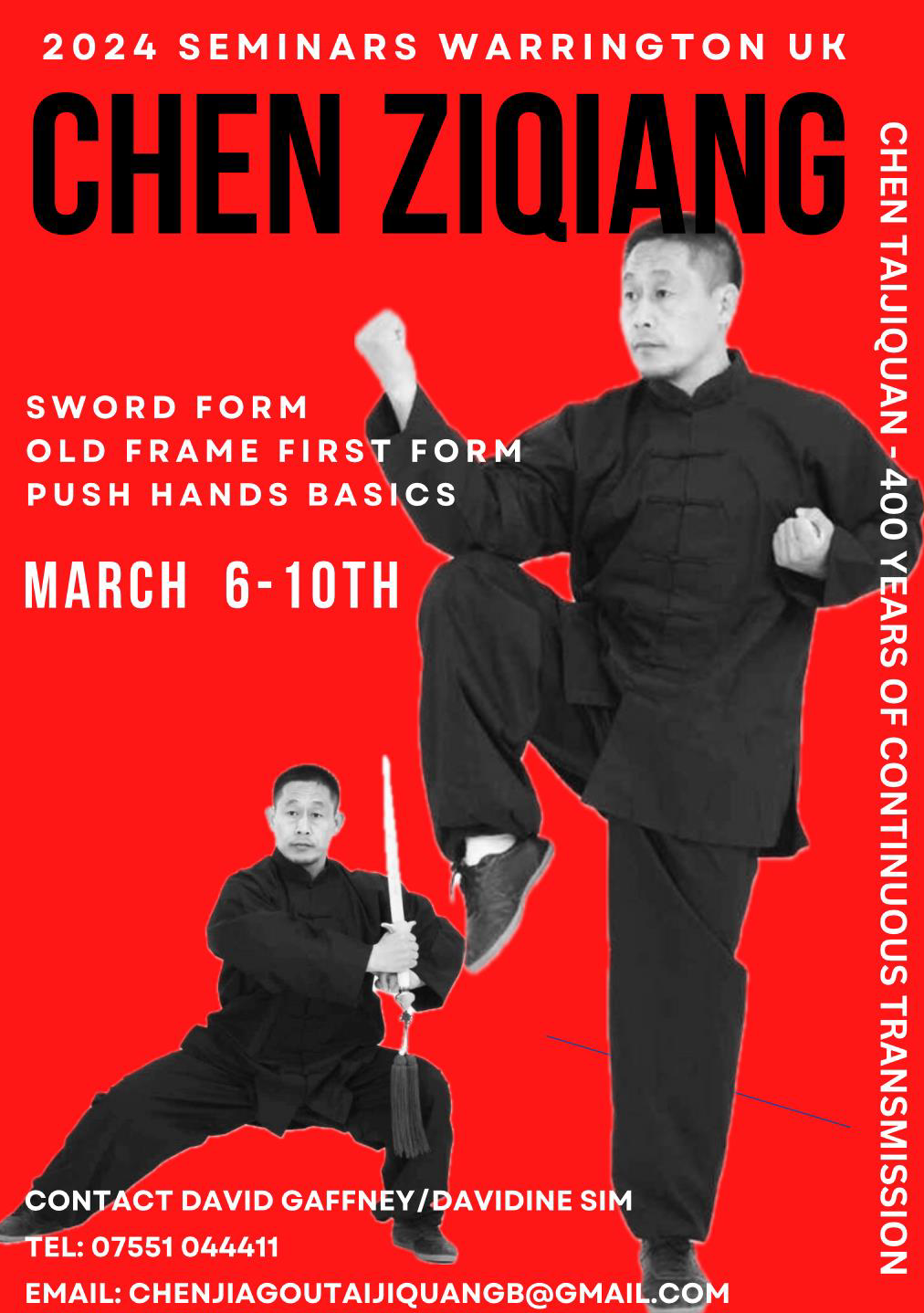
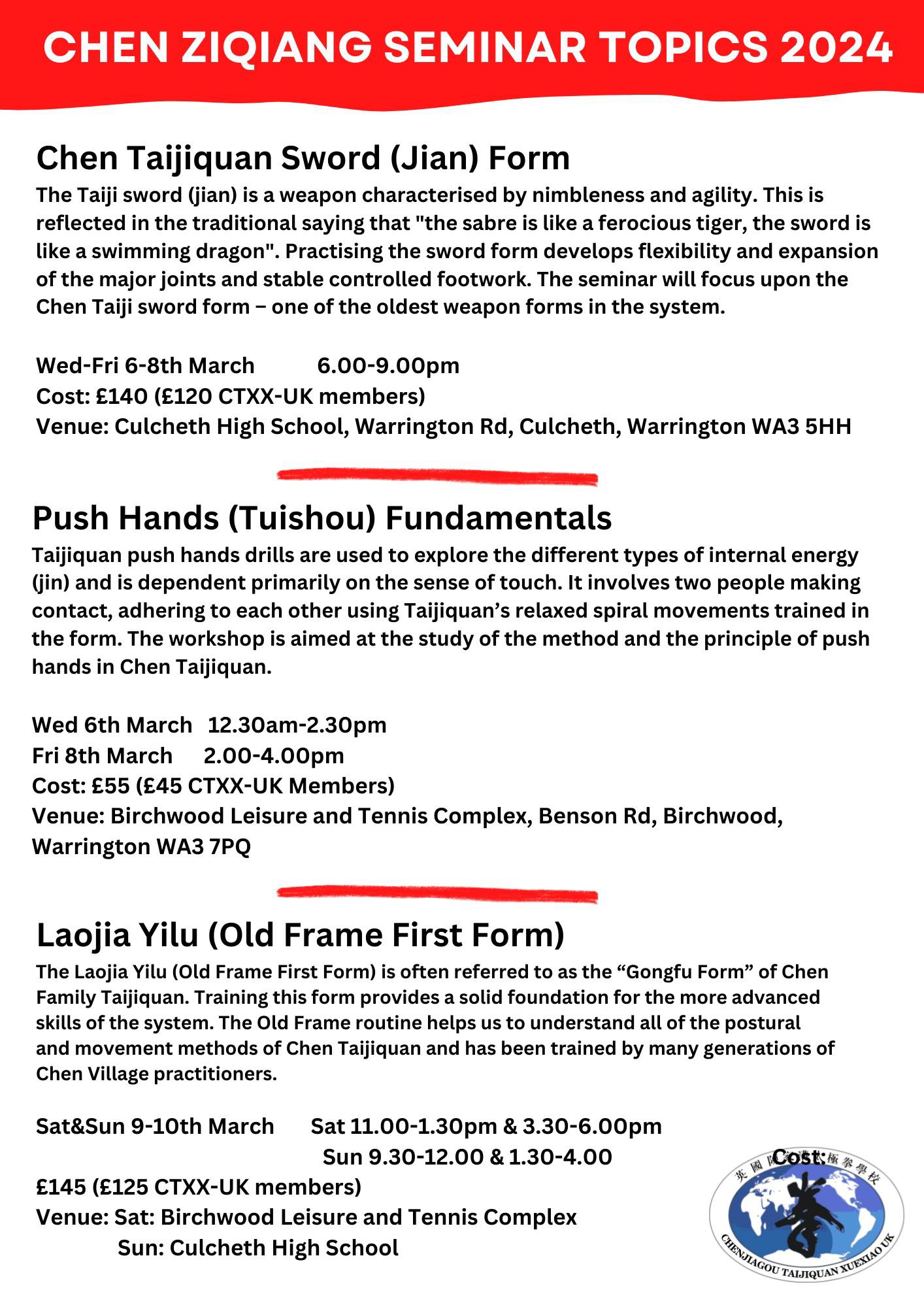
Chen Zhiqiang, Chief Coach of the Chenjiagou Taijiquan School and eldest son of Grandmaster Chen Xiaoxing, will be back in the UK this March with seminars covering Push Hands, Straight Sword (Jian) Form and Lao Jia Yilu.

Download the PDF here or contact David Gaffney (details on the flyer below) to book yourself a place.