New Frame 15 Form (the first 15 movements of Xinjia)

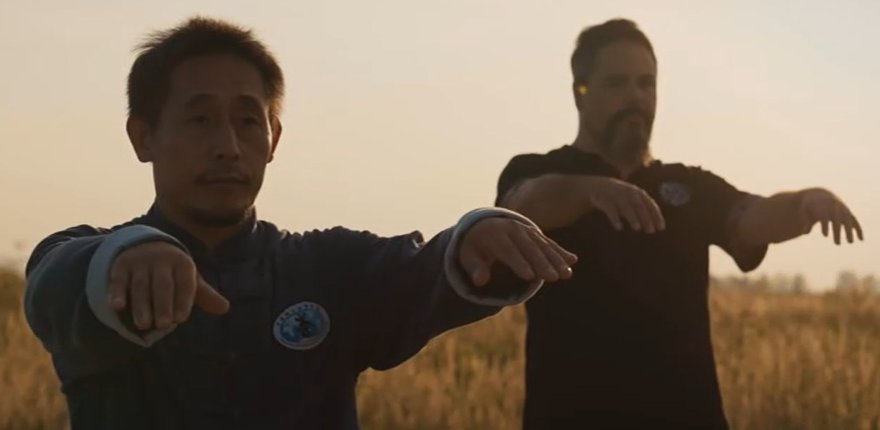
Although as a club we focus on the old frame of Chen Tai Chi, we include the new frame 15 form in our syllabus to help students better appreciate the connections between Dantian and arms/hands. The form is derived from the first 15 movements of Xinjia Yilu, but online examples of the variation we practice are as rare as the proverbial rocking horse dung. The video below features the incomparable Grandmaster Wang Haijun performing the 15 form in the manner we practice it.

Grandmaster Wang is based just outside Manchester and for the last couple of years I've been lucky enough to spend a couple of hours a week training with him. Training with him has helped me to better understand the importance of good posture and to feel the internal connections within my body. This  in turn has changed my approach to teaching, which I hope is trickling down to the broader membership of the club. For those who are unfamiliar with the Grandmaster, here's a little bit about him from his website:

"Grandmaster Wang Haijun was born in January, 1972 in Zhengzhou city in Henan province. At the age of nine his father arranged for him to move to Chen Village to live and study with Grandmaster Chen Zhenglei. Each day before school he would train from five to seven thirty in the morning. After school he would train from four until six, frequently training again in the evening for another two hours before going to bed.

In the autumn of 1988, he gained entry to the Wuhan Physical Culture University, one of the top universities of its kind in China. He competed successfully for his university in many competitions. After graduation Grandmaster Wang Haijun was assigned to the post of coach of Pingdingshan Wushu Research and Study College. He is a senior state Wushu referee, the president and head coach of Zhengzhou Wushu Research and Study College, and coach of Henan Chen Zhenglei Taiji Culture Co., Ltd. He is an official lineage holder of Chen Style Taiji (12th generation Chen Taiji).

He has an extensive list of accomplishments in competition. In 1992 he won three gold medals in national competition, and won the championship in push-hands at the National Taiji Boxing, Sword and Push-hands Competition. In 1994 he won two gold medals in Taiji boxing and sword at the International Wenxian Taiji Championships, and he won the 80-kilo championship in push-hands at the National Wushu Championships. For three consecutive years, 1996, 1997 and 1998, Grandmaster Wang won gold medals in form, sword and push hands as well as the all-around champion’s gold medal at the Chinese National Championships – the highest level of competition in China.

Since 1990, Grandmaster Wang has been taking his students to top level competitions in Henan province and the Chinese National Championships. His expertise as a teacher is demonstrated by the fact that his students have won more than 30 gold medals at these competitions. Students of his that have won gold medals at the Chinese National Championships include: Fu Nenbin (push hands, 56 kg class), Fu Zihui (push hands, 52 kg class), Yang Lei (push hands, 65 kg class), Zhao Zhifang (push hands, 63 kg class), and Shi Zhenwen (push hands, 52 kg class). Grandmaster Wang has been certified as 7th Duan in the Chinese National Wushu Association Duan Wei System."

So, that's the man... here's the video:

Grandmaster Wang Haijun demonstrating the New Frame 15 Form


Pao Chui - The Old Frame Canon Fist

The Chen Taijiquan Old Frame consists of two forms: Laojia Yilu and Laojia Erlu.

Laojia Yilu (often referred to in our classes as the 74 form) contains all the essential elements of Chen Style Tai Chi. It consists of 74 movements (well, the clue was in the name) and takes around 15 minutes to complete. Committing the sequence to memory is an achievement in itself and some students are content to focus on the shorter forms such as Chen Zhenglei's 18 Movement form , but for those who persevere a deeper understanding and appreciation of Tai Chi awaits.

As knowledge and skill levels increase Laojia Erlu beckons the dedicated student. Also known as Pao Chui or Canon Fist, it features explosive energy releases in the form of strikes, kicks and jumps that are far more reminiscent of a Kung Fu fighting form than most peoples idea of Tai Chi.

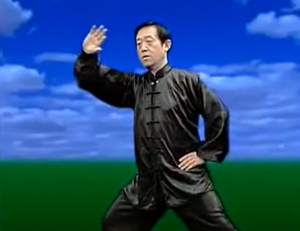
The video below features Master Zheng Dongxia performing a version of the form. Apart from the fact that it's beautifully executed, she performs it slowly enough that you can clearly see her movements. She also helpfully explains what she's doing as she moves through the form. Shame it's in Mandarin without subtitles!


How can Tai Chi be a fighting art?

Chen-style Taiji Quan, or simply Tai Chi as it's more commonly known here in the west, is best known for its slow movements and increasingly well documented health benefits. What is perhaps less well known is that it's actually a martial art built around the philosophy of Yin-Yang and the concepts of small defeating big and soft beating strong.

In the video below Sifu Kleber Battaglia (an Italian Wing Chun practitioner based in Shanghai) visits Chen Jiagou and spends time with Master Chen Ziqiang. Whilst there he discovers the the true martial power of Chen Style Tai Chi...


Tai Chi 8 Strengths/Energies

Anyone who's tried, or even just read about Tai Chi will have encountered talk of energy.


The Chinese paradigm of Qi and Jin can be confusing to western minds when first encountered, but we're really just discussing how we move our bodies. The language of Newtonian mechanics (ie: potential and kinetic energy) can serve just as well to describe the process of storing and releasing energy in the body, but to fully understand how this energy is expressed we need to consider something called the 8 Strengths/Energies which underpin all movements within Chen Style Tai Chi.


In our weekly sessions we often practice a standing exercise which cycles through the first 4 of these energies: Peng, Lu, Gi and An, whilst our advanced sessions expand the exercises to encompass the remaining 4 energies: Tsai, Lie, Zhou and Cow.


The following article from the Tai Chi Basics website does a great job of describing each of the 8 energies to help you better understand the purpose of the exercises we practice and how they relate to our Tai Chi forms:


A explanation of the Tai Chi 8 Strengths/Energies


"Chen Taijiquan Illustrated" - A great student handbook!

There are literally thousands of books about Tai Chi available, including a wide range of texts old and new focussing on the Chen family style (I should know, I own more than my fair share of them!).
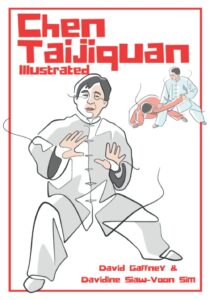
I recently bought "Chen Taijiquan Illustrated" by David Gaffney & Davidine Siaw-Voon Sim. Where other books can get bogged down in complicated textual descriptions and lost in the Chinese paradigm, Chen Taijiquan Illustrated" breaks the subject down into manageable chunks making it easy to understand and digest for beginners and more advanced practitioners alike.
Breaking the subject down into 3 sections, the book focuses on the physical rules governing posture and movement, applications of the techniques learnt through form practice and the philosophical concepts underpinning the art.
Each section is presented as a series of condensed bullet lists pulling together Western and Chinese terms and ideas complemented with helpful illustrations and quotations from Grand Masters past and present. It succeeds in that rarest of achievements and presents the complexities of Chen Style Tai Chi and in a way that is comprehensible and useful.
If you haven't already, you can grab yourself a copy on Amazon, or from the authors' website, here:
Chen Taijiquan Illustrated

Old Frame / New Frame - The same but different!

We have two sessions on a Thursday evening. The first is an open class for students of all levels where we focus on practising silk reeling exercises and the old frame short forms of Master Liming Yue and Grand Master Chen Zhenglei. In addition to the old frame short forms, we also practice the first 15 movements of the new frame form, Xin Jia. When first introduced to the 15 Form, students can struggle to see how some of the movements can be related directly to the movements they've learnt in the preceding old frame forms.

Our second session of the evening is aimed at more advanced practitioners where, amongst other things, we focus on the practice of the old frame form Lao Jia Yilu. This video features Master Chen Xiangwu practising Lao Jia Yilu, but he includes fajin (energy) releases and performs certain movements in a more new frame style. It's an interesting study because it provides an insight into how the old and new frames are just two sides of the same coin...

Master Chen Xiangwu performs Lao Jia Yilu with additional fajin releases

Tuesday Schedule Change & Silk Reeling Tutorial

Just a reminder that there will be NO CLASS in Tarleton this Tuesday afternoon (17th May). We'll be open again as usual next week.

In the absence of our Tuesday session, you might like to practice a little silk reeling. On our YouTube channel you'll find a link to a great instructional video from Grandmaster Chen Zhenglei demonstrating a variety of silk reeling exercises that we practice in class...

Just a few weeks until we welcome the wonderful Feixia Yue from the UCLan Confucius Institute for an afternoon studying the ancient Shaolin Yi Jin Jing Qigong sequence.

The seminar is taking place at St. Aidan's Church Hall in Bamber Bridge and starts at 1pm on Saturday 27th October. In order to maintain social distancing places at the seminar are limited, however there are still a couple of spaces left. If you'd like to grab one of them, head over to the Seminars page to book your place.

If you haven't encountered the Yi Jin Jing before, the video below features Master Faye Yip, president of the British Health Qigong Association, performing a truncated version of the form.

鬆 Song: The melody of relaxation

One of the skills we learn as we progress on our Tai Chi journey, is how to relax our bodies. The Chinese word for this bodily state of relaxation is song (鬆) and the video linked below helps to explain the concept and walks you through a simple mind exercise to help you better understand what it feels like to be song.


Click the image above to watch the video

Internal Energy

Internal energy.
 
It's a phrase that gets thrown about in Tai Chi classes like confetti at a wedding. Unfortunately, the concept is often misunderstood and shrouded in mystical terminology. At it's heart, Tai Chi is a fighting art, however practicing it without martial intent also delivers a wealth of health benefits.
 
Traditional Chinese Medicine (TCM) puts Qi at the centre of its paradigm and Tai Chi incorporates TCM principles in its practice, which in turn actively promotes good health. As a result, the TCM principles are often conflated with the concepts of martial Qi expressed through Jin.
 
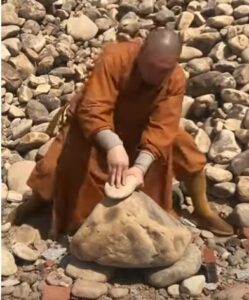
Examples of apparently superhuman strength exhibited by King Fu practitioners are common. These feats are possible because the practitioners have spent years training and developing their internal physiology just as an Olympic athlete would train their muscles and cardio for strength, speed and endurance. The video below demonstrates the incredible internal power than can be developed and released through the body. This isn't a demonstration of "strong fingers". In terms of modern science, you can think of the strike as transferring kinetic energy from the body into the rock through the fingers.
 
Intrigued? At Ling Shui we try to offer members to the opportunity to develop both the martial and the TCM aspects of Tai Chi as they prefer. Whilst we can't promise to have you smashing rocks with your fingers, we can teach you how to start developing these skills while also enjoying a nice hot cup of the finest green tea!
 
We have weekly classes in Penwortham, Bamber Bridge, Lostock Hall and Tarleton. Beginners are always welcome. For further details regarding times and locations, take a look on the classes page.
 
Click to watch a Shaolin Monk break rocks with nothing but his fingertips.