The Fascial Layer and Tai Chi

At Ling Shui we talk a great deal about the importance of the body's fascial layer in practising Tai Chi. It provides a useful bridge to understanding the apparent contradictions the two very different Western and Traditional Chinese medical paradigms.

From a Tai Chi perspective, we train ourselves to feel the physical connections within our body and use spiralling, coiling motions to move using those connections.

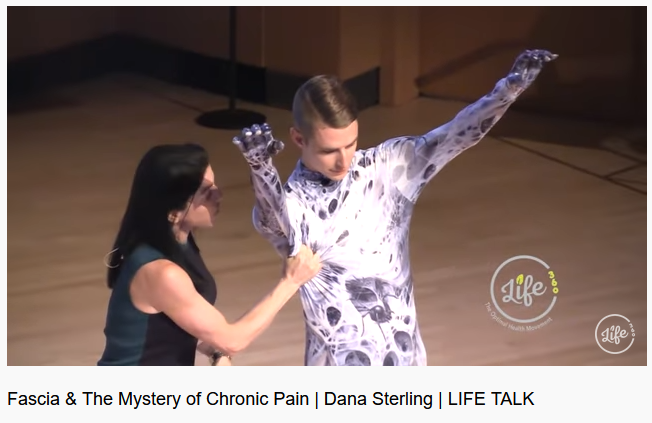
From a Traditional Chinese Medicine perspective, anyone who has used acupuncture to treat muscular pain will more than likely have been astounded at the relief that just a few small needles dotted around the body can have. The idea that the acupuncture channels are part of the fascia provides a possible explanation for the underlying physical processes that are at work.

The following video gives a wonderfully clear explanation of how the fascia plays a role in both movement and pain:


Tai Chi: Promising for COPD

Tai Chi and Qigong both have many health benefits attributed to them. While some of these claims stretch the limits of credulity, those of us who practice the arts are familiar with the benefits that come with regular practice.

Anecdotal evidence is not data though, so it's always good to back up what we practitioners know with a bit of good old fashioned scientific research.

The following article from the Harvard Medical School touches upon the benefits of Tai Chi practice for sufferers of COPD.

If you know someone who suffers from this unpleasant disease you might want to introduce them to this article and tell them about us (while reassuring them that UK classes are markedly cheaper than their US counterparts!)


Tai chi: Promising for COPD


Qigong, used to complement COVID-19 and cancer treatment, a mental 'game-changer'

Traditional  Chinese Medicine (TCM) is built around an entirely different paradigm to that of Western medicine. As a result, TCM can seem a little crazy when first encountered by Westerners who have only been exposed to the clinical approach to medicine . The void left by the lack of understanding is frequently filled with vague and confused language, often centred on the idea of energy. In fact, there's no need for mystical explanations. By understanding that the two medical traditions simply approach the human condition from different directions and that neither tradition is definitive,  it's possible to find truth and value in both.

In recent years, Western science has increasingly investigated the claims of TCM with regard to treatments such as acupuncture and pursuits such as meditation, Tai Chi, Qigong and Yoga (which of course originates in India but is analogous to Tai Chi in many ways. That's the subject for a post all of it's own though!). The resulting studies are slowly building a picture of the real and tangible benefits to be gained from the Chinese model. The discovery of the Interstitium and investigation into facial layers within the body provide Western models with a medium through which the effects of treatments like acupuncture can be transmitted throughout the body.

Of course, those of us who practice Tai Chi and Qigong already know how beneficial it can be in helping to maintain physical and mental wellbeing, but it's always nice to have a little bit of Western science confirming what your body's telling you!

As Covid-19 continues to spread around the world, the following article discusses the benefits offered by Qigong and Tai Chi for people recovering from not only Covid, but other equally awful illnesses such as cancer...


ABC News Australia


Physiology and Qi

When discussing our Tai Chi practice, there can be a tendency to rely on words such as Qi, Shen, Meridians and Dantian. Whilst these concepts are all important parts of Tai Chi, they can take time to understand and are open to widespread misinterpretation.

During our practice, we periodically practice the Zhan Zhuang standing meditation. This is a fundamental exercise in the practice of Tai Chi because it helps to cultivate Qi and Shen. But what does that actually mean?

Whatever else may or may not be happening when we practice Tai Chi, from a Western scientific point of view there are some very real, quantifiable physiological effects.

Click below to read a brief article published on the Yield Turn Push Tai Chi Blog which discusses what happens in the body during Zhan Zhuang practice and relates it to the concept of Qi...


Yield Turn Push Tai Chi Blog

Popular Science: Scientists found a ‘new organ,’ but it might not be what you’re expecting

I've shared an article very similar to today's link previously, but when I came across this particular article this morning I thought it was worth sharing again.

Traditional Chinese Medicine and acupuncture contain the idea of meridians running through the body transmitting Qi and promoting health. Illness and disease are thought of as Qi blockages in the meridians which both TCM and acupuncture seek to clear in order to restore balance and, consequently, health.

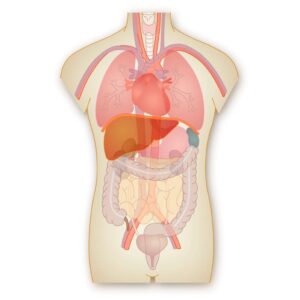
The article linked below talks about the idea that scientists have discovered what they believe to be a new organ in the human body named the Interstitium.

It's a cellular layer which surrounds all of our internal organs and envelops the entire body.

Whether it's ultimately classified as an organ or not isn't really important from a Tai Chi/Qigong point of view. For those of us who at times struggle to reconcile the western scientific paradigm with that of TCM, the Interstitium provides a potential explanation for how treating one area of the body can have an appreciable effect on a completely different part of the body.

By enveloping the entire contents of our body in a single layer, the Interstitium provides a medium for the meridians to traverse, with acu-points targeting areas that are able to interact with other remote parts of the body via the Interstitium. Click the link below and read on for a fuller explanation of the science...


Popular Science: Scientists found a ‘new organ,’ but it might not be what you’re expecting


Tai Chi, Oxytocin and the fight against Covid-19

Our bodies produce a hormone called Oxytocin, which is often referred to as the love hormone. Oxytocin is related to feelings of happiness and wellbeing and is produced by the body at moments of physical affection and intimacy, hence the nickname. In addition to intimacy though, there are many activities that have been shown to give rise to the production of Oxytocin including exercise, meditation and deep, slow, natural breathing.

This is great news for those of us who regularly practice Tai Chi, Qigong, meditation and Yoga, and goes some way to explaining why we feel so great after a session. Training together in groups has also been shown to elevate oxytocin levels to an even greater extent than solitary practice.

Last month (April 2020), a paper was published in the Clinical Neuropsychiatry Journal of Treatment Evaluation which suggested that Oxytocin could be instrumental in reducing the severity of Covid-19. The evidence is compelling and there are a number of serious European studies currently underway to (hopefully) confirm the hypothesis. You can download the paper using the link at the bottom of this post.

The long and the short of it is that, if the theory is correct, regular Tai Chi, Qigong and meditation can make a very real difference in your body's ability to cope with and control the virus. The effect will be even greater if you train in a group.

Lockdown has given us plenty of time to train, but converting good intentions into practice can prove difficult. Regular face to face classes are still some way off, so why not consider joining us for our free popular Qigong for Health class every Saturday morning at 11am where we spend an hour and a half practising some gentle exercises and finishing with a guided meditation. At the very least, you'll feel great after making some space in your day to relax, and at best you'll boost your Oxytocin levels and bolster your body's ability to counter the Coronavirus if you're unfortunate enough to pick it up!

To take part in the class, email info@taichipreston.co.uk for details.

 

Oxytocin a possible treatment for Covid-19: Everything to gain, nothing to lose.


Fall Prevention: Why Every Aging Adult Should Learn Tai Chi

We all know someone who's elderly and prone to the occasional fall. Did you know that studies have demonstrated that regular Tai Chi practice can dramatically reduce the rate of falls and injuries in elderly practitioners?

This week's link is to an article on The Doctor Weighs In  science and health website which talks about the importance of fall prevention in aging adults and examines at the science behind studies which recommend Tai Chi as valuable tool in preventing falls as we get older.


The Doctor Weighs In: Tai Chi and fall prevention